تخطي إلى المحتوى
Cold Chain

Refrigerated and Frozen Shipping from Saudi Arabia to Bahrain 0506688227 One point for two crossings rather than one
Refrigerated and Frozen Shipping from Saudi Arabia to Bahrain 0506688227 One point for two crossings rather than one
Guide summary

Refrigerated and frozen shipping from Riyadh, Jeddah and Dammam to Bahrain — 450 kilometres with an independent temperature log handed to you and written conditions on the carrier. We own no refrigerated fleet but carry through a network we select, set conditions for and monitor. What sets this line apart: One point for two crossings rather than one. The duration is a single day with no overnight stop, and a full chilled load is SAR 4,230 to 6,440 outside the peak. And the temperature log is timestamped at the crossing rather than on arrival — so the stage and the party are known rather than only that a deviation occurred.

Shipping chilled or frozen goods to Bahrain? Tiger Cargo Express handles the carrier conditions, the pre-cooling, the 450 kilometres and a log handed to you. To book: 0506688227

The question nobody asks about refrigerated shipping: what happens to the load while it stands? Loading is seen and handover is seen — and between them lie hours at borders that nobody sees.

This page is about those hours on the Bahrain line specifically.

450kilometres
1continuous log
0acceptable deviation
20+years in the field

One point for two crossings rather than one

The procedure repeats and the unit runs through both.

One point for two crossings rather than one
The procedure repeats and the unit runs through both.
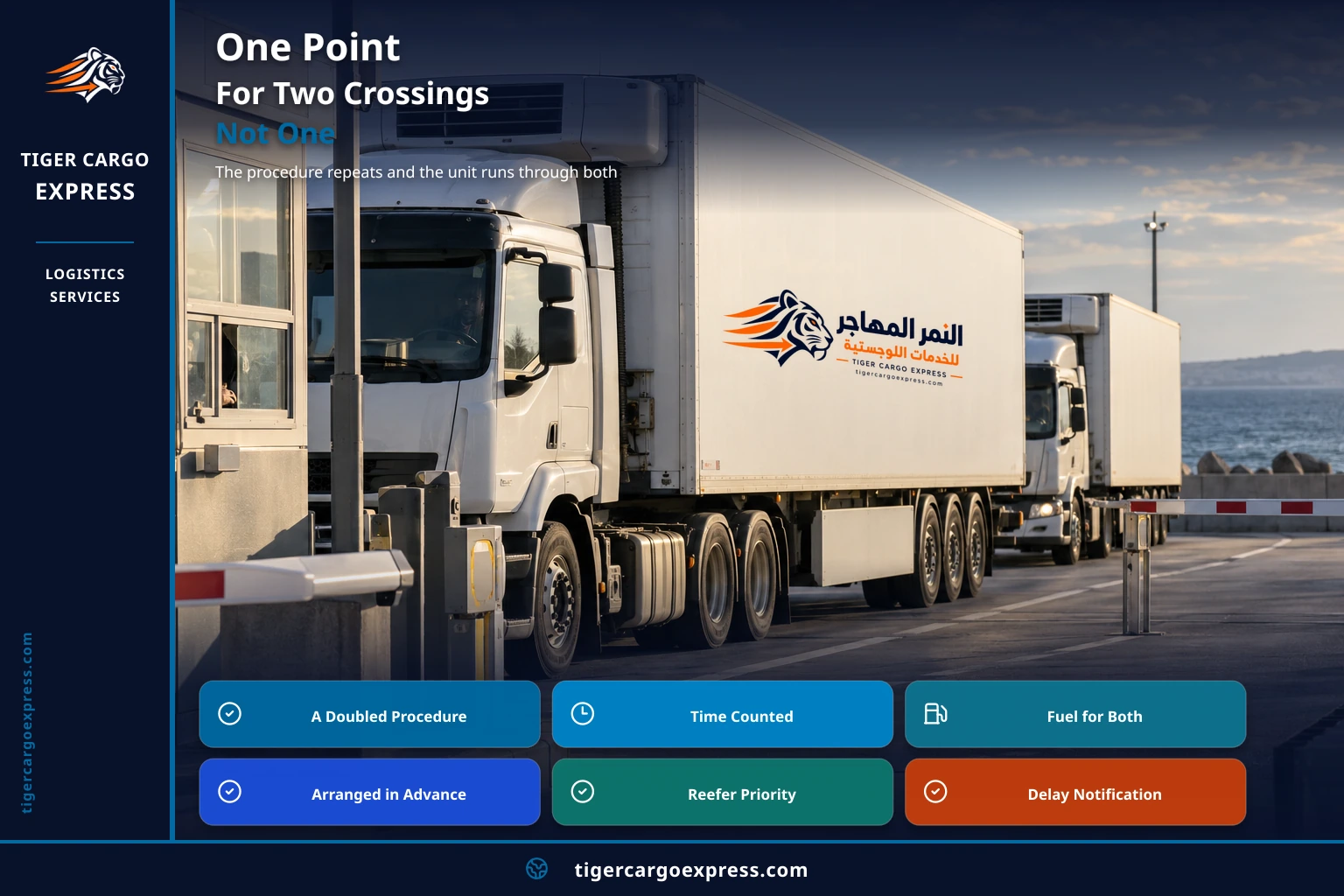
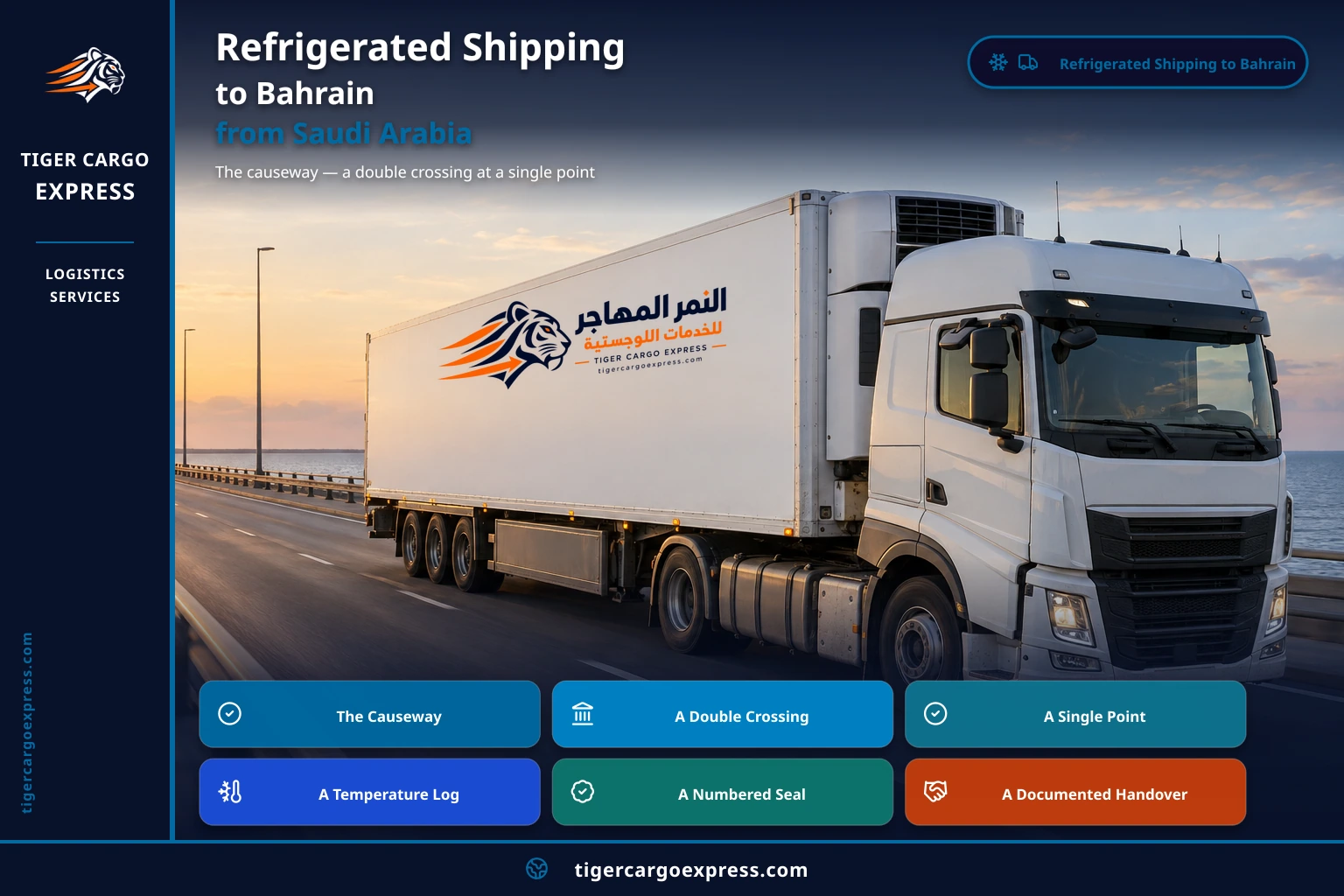
The causeway joins what others separate: an exit and an entry within one continuous space. Which looks faster — and is so in distance rather than in procedure.

The item An ordinary land border The causeway
Distance between the two points Kilometres Continuous
Number of procedures Two Two as well
Where you wait between them In a yard On the causeway itself
The unit running Through both Through both
An alternative when congested There may be one There is none
The effect of weather Limited Wind can affect it
And the common error: assuming nearness means a fast procedureFour hundred and fifty kilometres are covered in hours, and a procedure is not measured in kilometres. A consignment reaching the causeway at midday may wait there as long as one at a distant border. We count the crossing hours twice in our estimate rather than once — and reach the causeway at a quieter time even if it means departing hours earlier.

What we check before the lorry moves

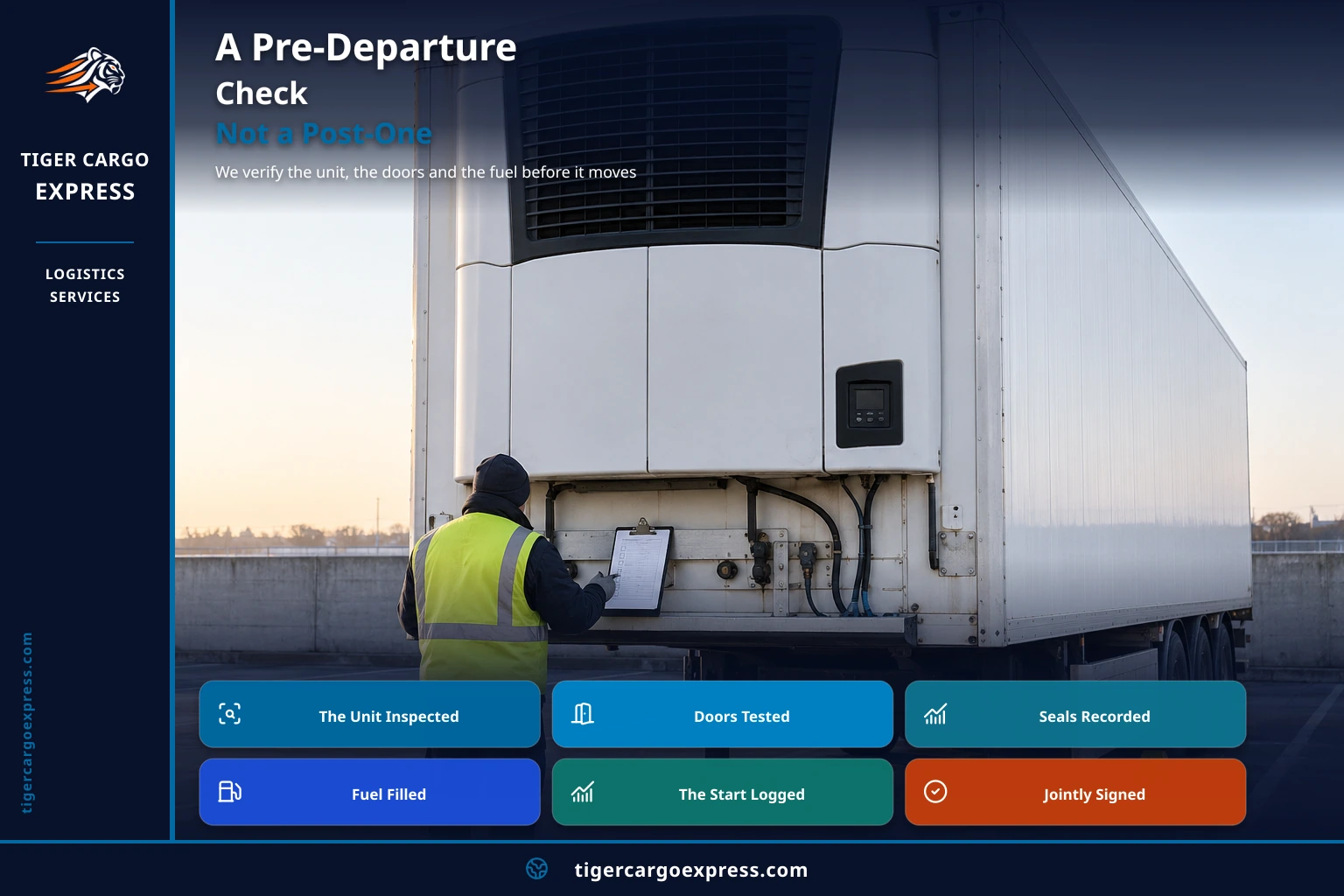
A pre-departure check rather than a post-one
We verify the unit, the doors and the fuel before it moves.

Six items taking half an hour to check — and days to repair whatever you skipped among them.

  • Measuring inside the body rather than hearing the unit — turning is not cooling
  • The gaskets are touched and seen rather than assumed sound
  • The condenser inspected and cleaned — dust stops it shedding heat
  • The unit’s running range calculated for the line rather than the average
  • The logger photographed in place — the picture documents its position, not its existence
  • The seal number sent to you before departure rather than at handover
And the photograph documents the position rather than the existenceA logger sitting in the air path serves you no better than the unit’s own reading. We photograph it inside the load between the pallets so you see with your own eyes where it was placed — settling an entire discussion that might otherwise arise later.

What we ship to Bahrain

Your frozen productsAt −18 and below with a unit reaching −25.
Your chilled productsIn a zero-to-four band with calculated ventilation.
Meat and poultryArranged to prevent contact and let air pass.
Dairy and cheeseWhere the duration matters more than the degree.
Fruit and vegetablesWith separation of what ripens what.
Dates and agricultural produceWith their certificates before loading.

The temperature log at the crossing, not on arrival
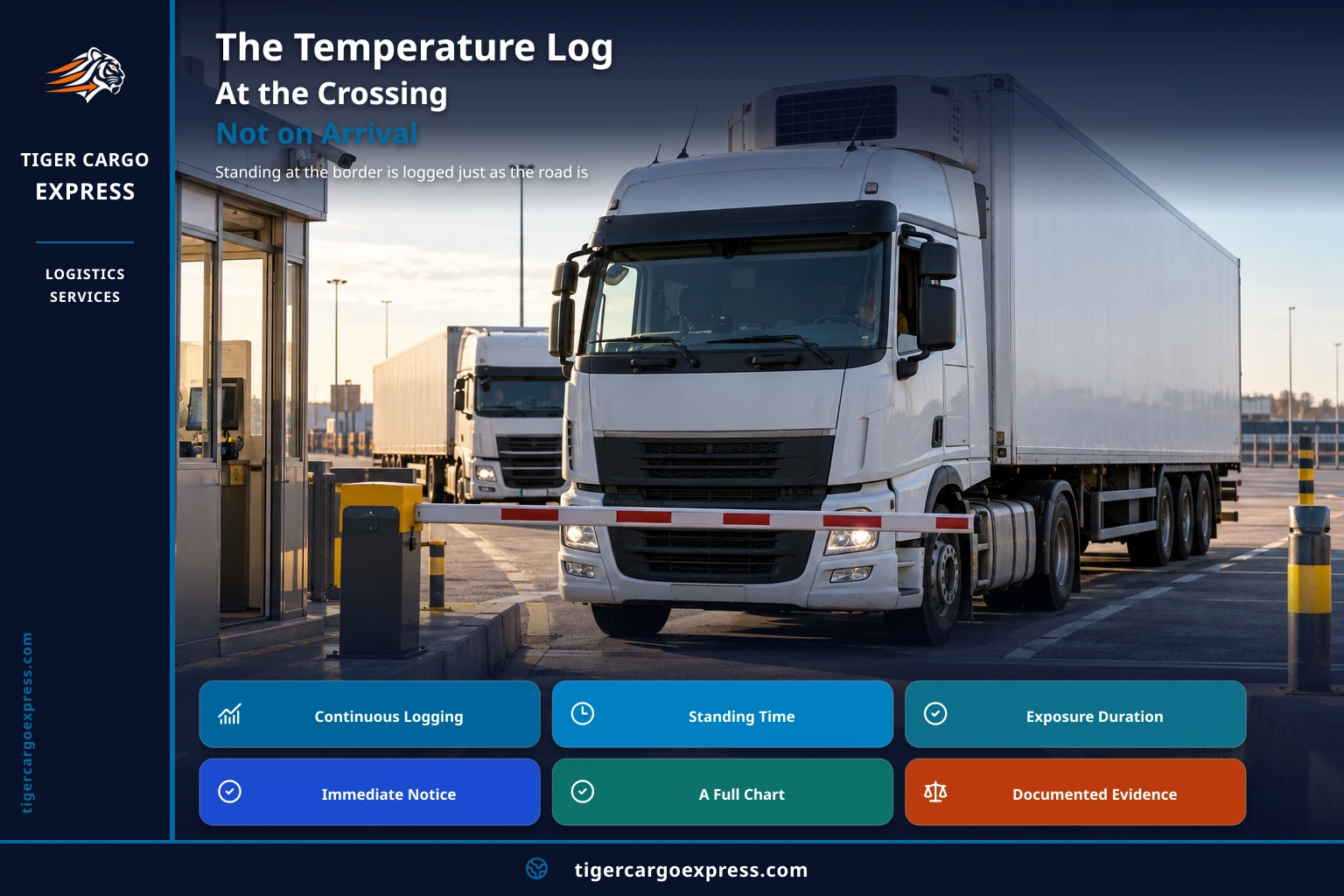
The temperature log at the crossing, not on arrival
Standing at the border is logged just as the road is.

Most deviations on international lines happen standing rather than moving. The reason is simple: standing combines high ambient heat, no airflow and a long time in one place.

The item On the road At the border
Airflow over the condenser Strong None
Ambient heat Renewed Trapped between vehicles
Exposure duration Moving Fixed and long
Chance of the unit being switched off It does not happen It does
What shows in the log A steady line The most important thing read in it
And we require entry and exit times at every pointNot merely a temperature figure. The chart alone says a rise occurred; the timestamp says where it occurred and who held the load then — and between the two lies the difference between a complaint and a claim.

Refrigerated shipping prices to Bahrain

The table is indicative — the final figure follows knowing the item and the set point.

The load Outside the peak In peak seasons
A part load (up to 5 pallets) SAR 1,470 – 2,250 SAR 1,646 – 2,520
A half load (6–14 pallets) SAR 2,570 – 3,910 SAR 2,878 – 4,379
A full chilled load SAR 4,230 – 6,440 SAR 4,737 – 7,212
A full frozen load SAR 4,780 – 7,260 SAR 5,353 – 8,131
A consignment with special requirements By survey By survey
And the final figure follows knowing the item rather than the weightThe same weight in two different items gives two different prices. Because the item sets the temperature point, the ventilation, the arrangement and how much duration it tolerates. Anyone pricing on 450 kilometres and the weight alone has not asked what actually matters.

Duration and schedule

What you ask The answer
How long is the road? A single day with no overnight stop
And how many kilometres? 450
And how long at the borders? A range we write — not a fixed figure
And when does my consignee receive? On the day of arrival if they are ready to unload
And where do you deliver? Manama, Muharraq, Riffa, Isa Town, Hamad Town and Sitra

Five questions before choosing your carrier to Bahrain

And the price comes last rather than first.

1How many days door to door?Not how many on the road — crossings and clearance come out of my shelf life.
2Where is the temperature logger placed?Inside the load or in the air path? The second measures the unit’s air.
3Whom do I deal with in a dispute?You or the carrier? And who refers me to whom?
4Do you notify me of a deviation at once?Or do I learn of it when the door opens? The decision is taken while it moves.
Why quotes are not compared on price aloneBecause the lower figure on the Bahrain line may mean a unit with no margin, or a logger in the air path giving a sound chart for spoiled goods, or an optimistic crossing estimate. The higher quote may genuinely be cheaper once those three are counted.

What we guarantee and what we do not

Written conditions on the carrierCapacity beyond the requirement, sound gaskets, and acceptance of the log and seal.
An independent log inside the loadNot a unit reading measuring its own air — and handed to you.
One responsibility before youWe do not refer you to the carrier — we settle with you and then with him.
An honest crossing-hours estimateNot an optimistic one — on refrigerated freight the duration is the shelf life.

And what we do not promise: We will not say the temperature will never deviate. Failures and border hours on the Bahrain line happen, and what we guarantee is that you learn of them at once and that they are recorded rather than discovered when the door opens.

Five mistakes on this line

Assuming a short distance means a short procedureA procedure is not measured in kilometres. A consignment reaching the causeway at midday may wait as long as one at a distant border.
Counting the crossing hours once rather than twiceThe causeway is one point but the procedure repeats — and the unit runs through both.
Accepting a price that does not itemise the unit’s running hoursA real line paid either out of the service quality or by you at handover. Ask for it in writing.
Relying on the refrigeration unit’s own readingThe unit measures its returning air rather than your goods. The logger goes inside the load rather than in the air path.
Not counting the crossing hours in the durationAn estimate omitting them gives you a prettier figure and a longer duration — and on refrigerated freight the duration is the shelf life.

Why us on this line?

We count the crossing twice rather than onceThe causeway is one point and the procedures are two — and an honest estimate says so.
We reach the causeway at a quieter timeEven if it means departing hours earlier — waiting there has no alternative.
We require capacity beyond the requirementA unit that barely suffices fails at the first condition that is not ideal.
We timestamp the crossing in the logSo the stage and the party are known rather than only that a deviation occurred.
We ask about shelf life before priceAnd may tell you this line does not suit your goods.
Verify that we are properly registeredRegistration 5800108005 and a documented national address — sent whenever you ask.
Send the item, the set point and your destination in BahrainAnd the estimate reaches you with our carrier conditions in writing.Call 0506688227Message on WhatsApp

Frequently asked questions about refrigerated shipping to Bahrain

Is the causeway faster than a land border?In distance yes, in procedure no. It is one continuous point but the procedure repeats twice: an exit and an entry. The unit runs through both, and there is no alternative to waiting there if it is congested.
How do you count the crossing hours?Twice rather than once. Most estimates count the causeway as one crossing because it is one point, while in fact it is two procedures. Our estimate says so plainly rather than appearing shorter than it is.
When do you reach the causeway?At a quieter time even if we depart hours earlier. Four hundred and fifty kilometres are covered in hours, and waiting on the causeway has no alternative — so the only control available is the hour of arrival at it.
Will you hand me the temperature log?Yes — from an independent device inside the load, handed over with the consignment rather than later. And without a recorded chart you have no claim: spoiled goods do not by themselves prove when they spoiled or in whose hands.
And do you own the lorry?No — we carry through a network of carriers we select, set conditions for and monitor. And we remain the only party before you — we do not say ‘the carrier says’ when something goes wrong.
Which towns do you reach there?Manama, Muharraq, Riffa, Isa Town, Hamad Town and Sitra. Beyond them by prior arrangement — and tell us your destination precisely, because it enters the duration and the estimate.
Do you ship both chilled and frozen on this line?Both — under different conditions. Frozen needs a unit reaching −25 and loading at −20, while chilled needs stacking that lets air pass and a shelf-life calculation before the price.
What if the unit fails?We are notified at once and we notify you at once — not on arrival. Then we arrange a replacement from the network or transfer the load by the position. This is what you buy from a network rather than a single lorry owner: that an alternative exists.
What do you need before pricing?Six things: the set point, the item, the volume, the loading point’s facilities, the destination precisely, and the remaining shelf life. The last is the one that surprises many — and may end with us saying: it is not worth it.

In summary

The road to Bahrain is not the road to anywhere else — and 450 kilometres have their own hours, borders and charge on the unit and the shelf life alike.

And the most important thing on this line: One point for two crossings rather than one.

And what we commit to on every line: written conditions on the carrier, capacity beyond the requirement, and one responsibility before you rather than a referral to a carrier.

Send the item, the set point and the remaining shelf life — the estimate reaches you within an hour. 0506688227

Your goods are in safe hands450 km · Written conditions · A log handed to you · One responsibilityCall 0506688227Message on WhatsApp
Shipping Guide

Related Shipping Guides

Continue with practical guidance connected to the same route or shipping decision.

Next step

Send your shipment details and get a written quote

We reply within 60 minutes during working hours — with what the price includes and what it does not, stated before you commit.