تخطي إلى المحتوى
Cold Chain

Refrigerated and Frozen Shipping from Saudi Arabia to Lebanon 0506688227 A reefer bears what dry freight does not
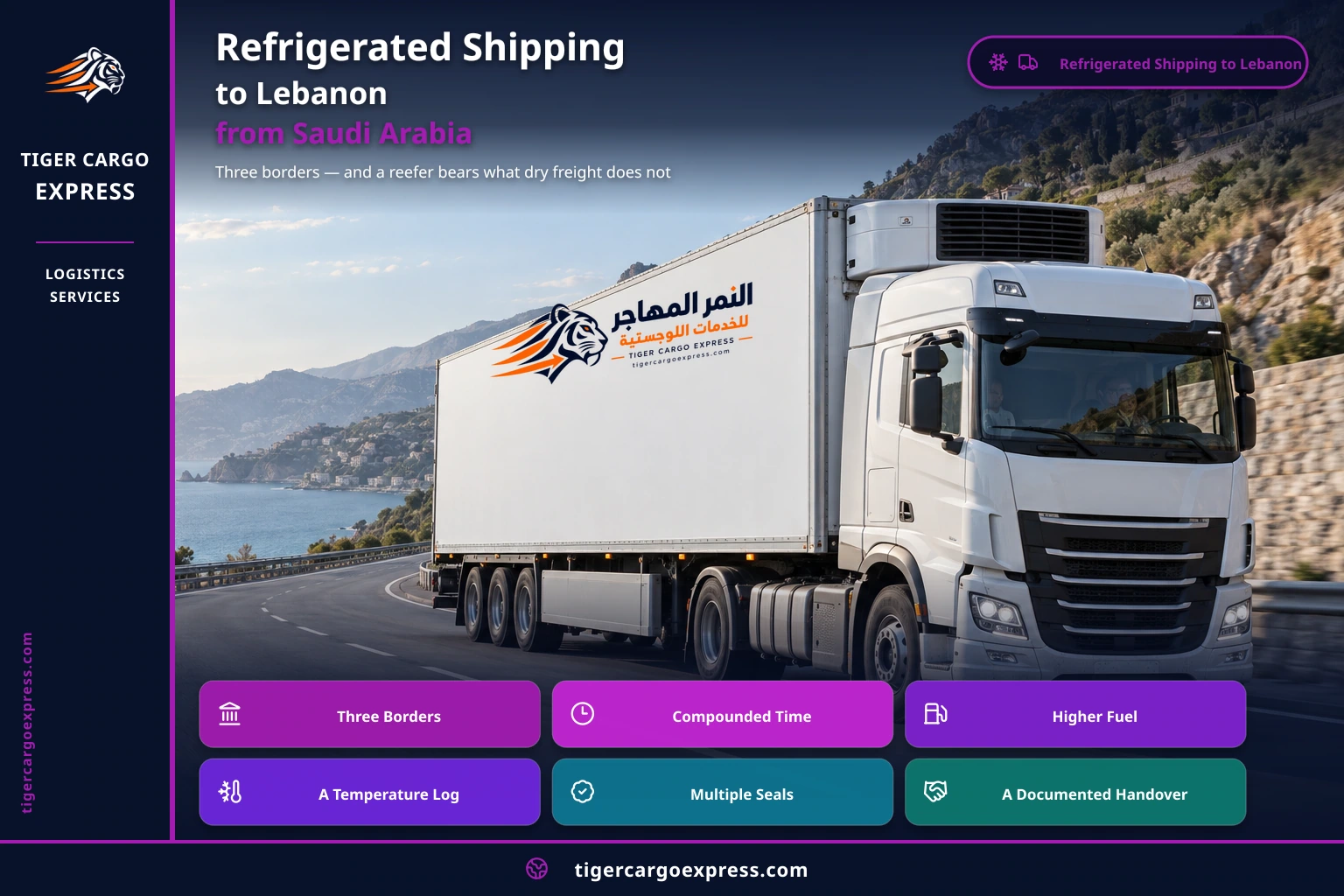
Refrigerated and Frozen Shipping from Saudi Arabia to Lebanon 0506688227 A reefer bears what dry freight does not
Guide summary

Refrigerated and frozen shipping from Riyadh, Jeddah and Dammam to Lebanon — 1,700 kilometres with an independent temperature log handed to you and written conditions on the carrier. We own no refrigerated fleet but carry through a network we select, set conditions for and monitor. What sets this line apart: A reefer bears what dry freight does not. The duration is three days with two overnight stops, and a full chilled load is SAR 12,140 to 18,480 outside the peak. And the temperature log is timestamped at the crossing rather than on arrival — so the stage and the party are known rather than only that a deviation occurred.

Refrigerated shipping to Lebanon from Saudi Arabia through a vetted carrier network with written conditions. Tiger Cargo Express — pre-cooling and a log handed to you. To book: 0506688227

What you buy in refrigerated shipping is not a lorry. Refrigerated lorries are plentiful and available to anyone who pays — what is rare is whoever sets conditions, verifies and bears the outcome.

And on the Lebanon line specifically the difference shows in one particular item, which is where this page begins.

1,700kilometres
7conditions on the carrier
1log handed to you
20+years in the field

A reefer bears what dry freight does not

Dry freight waits — refrigerated freight is consumed.
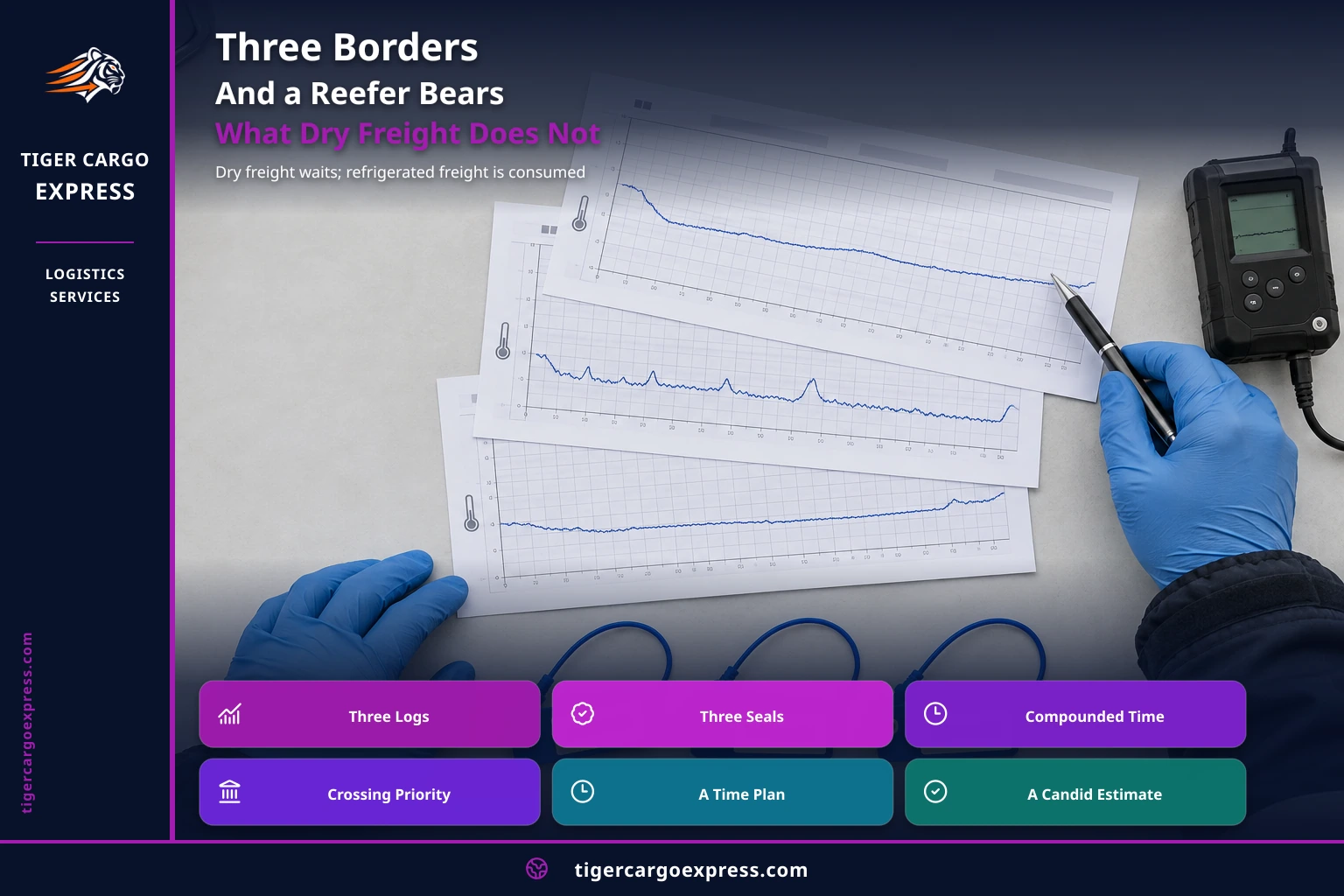
A reefer bears what dry freight does not
Dry freight waits — refrigerated freight is consumed.

Three borders. A figure dry freight tolerates and refrigerated freight does not in the same way. The difference is that dry freight waits and does not change, while refrigerated freight waits and loses.

An hour of waiting Its effect on dry freight Its effect on refrigerated freight
At the first border Nothing An hour of shelf life + fuel
At the second Nothing Another hour
At the third Nothing A third
The total A delay that is made up A life that is not
If the lorry breaks down It waits for the repair A race against the temperature
If it runs a day over It arrives a day later It may not be worth arriving
Which is why we work this line from the shelf life firstWe ask before the price: how much life remains on your goods? If the expected duration approaches what remains we tell you: it is not worth it — and recommend a longer-lived item, another route, or bringing the production date forward. This is the line on which we say no more than on any of our lines — and we say it before taking your money.

A pre-departure check rather than a post-one
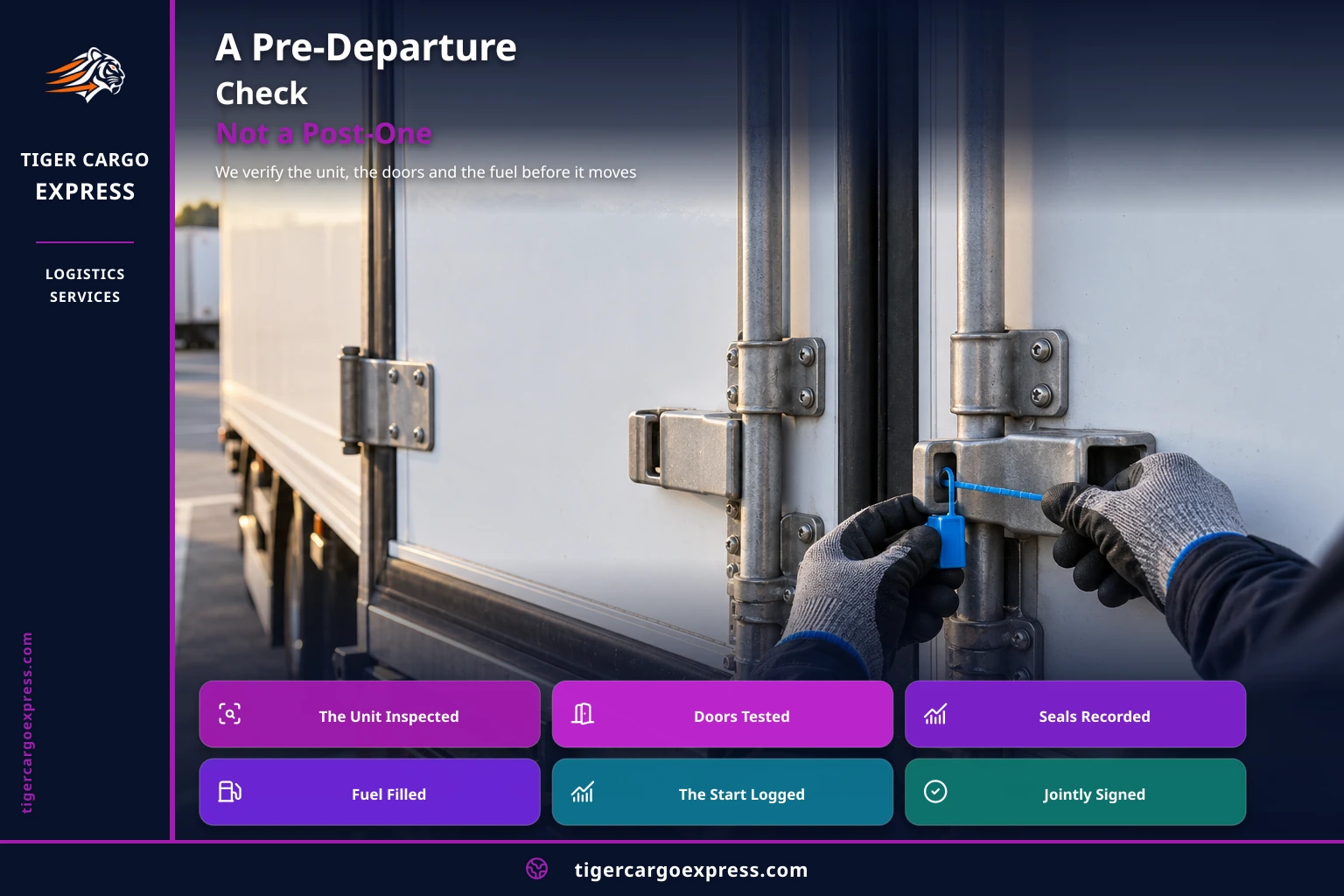
A pre-departure check rather than a post-one
We verify the unit, the doors and the fuel before it moves.

A check after departure is not a check but a discovery. We verify six items before the lorry moves — each fixed in minutes beforehand and in days afterwards.

  • The unit runs and actually reaches the set point — not merely that it turns
  • Door gaskets compressed and sound, with no cracks or hardening
  • The condenser clean — which matters in the hot months in particular
  • The unit’s tank full and its running range calculated against the line’s distance
  • The logger fitted inside the load, working and documented with a photograph
  • The seal numbered, its number recorded and sent to you before departure
And the first item is got wrong more than you would thinkA unit that turns is not necessarily a unit that cools. It may run with its fan turning while the condenser sheds nothing, or short of gas so it works to no effect. We measure inside the body rather than listen to the unit — the measurement takes a minute and the difference is a whole load.

What we ship to Lebanon

Your frozen productsAt −18 and below with a unit reaching −25.
Your chilled productsIn a zero-to-four band with calculated ventilation.
Meat and poultryArranged to prevent contact and let air pass.
Dairy and cheeseWhere the duration matters more than the degree.
Fruit and vegetablesWith separation of what ripens what.
Dates and agricultural produceWith their certificates before loading.

The temperature log at the crossing, not on arrival
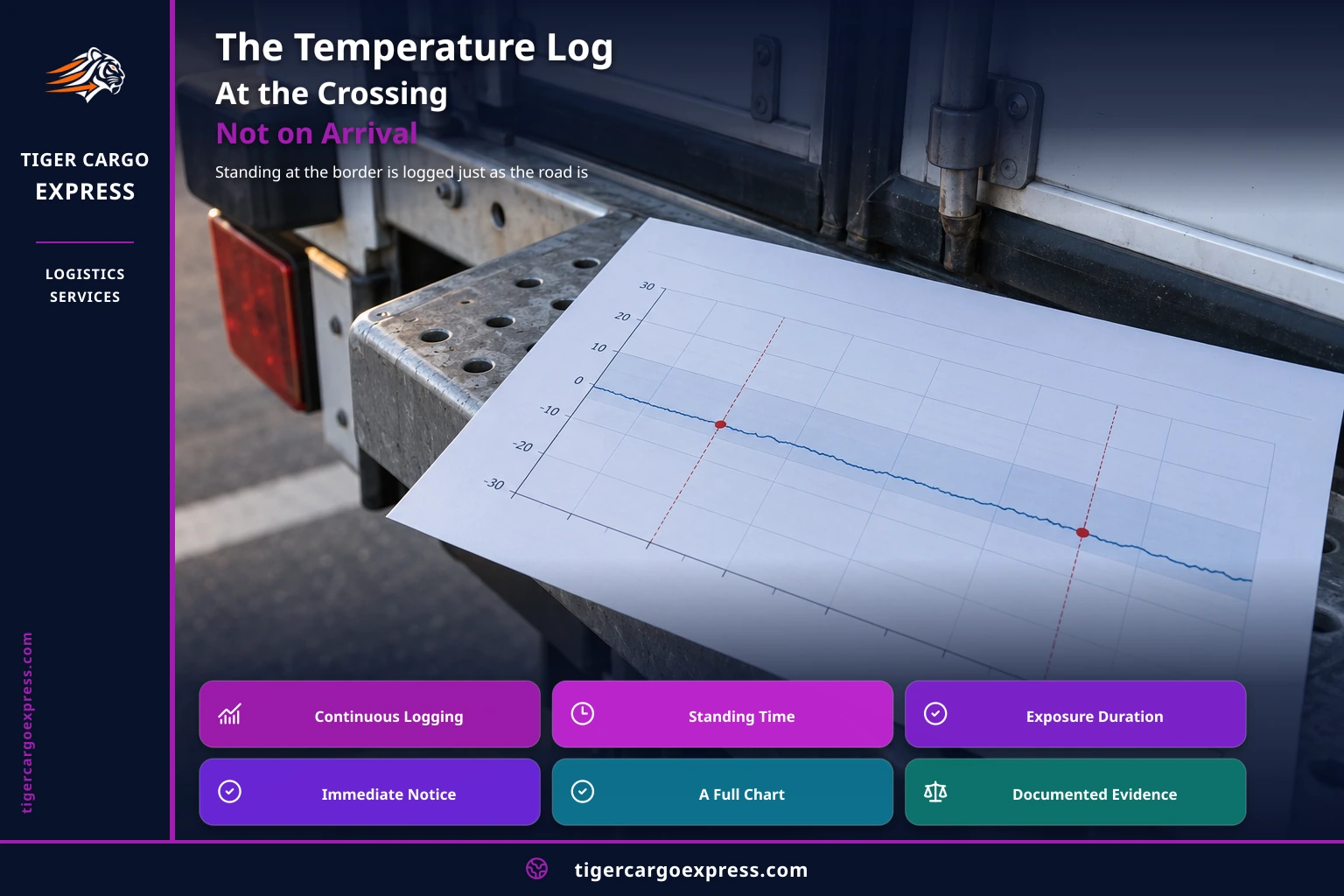
The temperature log at the crossing, not on arrival
Standing at the border is logged just as the road is.

Most deviations on international lines happen standing rather than moving. The reason is simple: standing combines high ambient heat, no airflow and a long time in one place.

The item On the road At the border
Airflow over the condenser Strong None
Ambient heat Renewed Trapped between vehicles
Exposure duration Moving Fixed and long
Chance of the unit being switched off It does not happen It does
What shows in the log A steady line The most important thing read in it
And we require entry and exit times at every pointNot merely a temperature figure. The chart alone says a rise occurred; the timestamp says where it occurred and who held the load then — and between the two lies the difference between a complaint and a claim.

Refrigerated shipping prices to Lebanon

The table is indicative — the final figure follows knowing the item and the set point.

The load Outside the peak In peak seasons
A part load (up to 5 pallets) SAR 4,220 – 6,460 SAR 4,726 – 7,235
A half load (6–14 pallets) SAR 7,390 – 11,220 SAR 8,276 – 12,566
A full chilled load SAR 12,140 – 18,480 SAR 13,596 – 20,697
A full frozen load SAR 13,720 – 20,850 SAR 15,366 – 23,352
A consignment with special requirements By survey By survey
And why two columns rather than one?Because peak seasons raise the haulage rate and lengthen the border hours together. Demand rises on qualified carriers, the borders congest, and refrigerated freight pays the difference twice: in the price and in the shelf life. Ask about the difference between two dates if yours is flexible.

Duration and schedule

What you ask The answer
How long is the road? Three days with two overnight stops
And how many kilometres? 1,700
And how long at the borders? A range we write — not a fixed figure
And when does my consignee receive? On the day of arrival if they are ready to unload
And where do you deliver? Beirut, Tripoli, Sidon, Tyre, Zahle, Jounieh and Baalbek

What separates one quote from another?

Questions a professional answers without hesitating.

1What are your carrier conditions, in writing?Ask for the sheet — spoken terms cannot be reviewed.
2Do you inspect the vehicle before loading?Visually or on trust? Gaskets are seen rather than assumed.
3How often does the device log?A six-hourly record hides a two-hour rise.
4Do you seal the lorry?With a numbered seal broken before my consignee, or with a lock?
And the first question reveals more than it seemsAnyone without written conditions is not setting conditions at all. Spoken conditions end at the first available carrier on a tight date. Ask for the sheet — and compare what is on it rather than what you are told about the Lebanon line.

What we guarantee and what we do not

Written conditions on the carrierCapacity beyond the requirement, sound gaskets, and acceptance of the log and seal.
An independent log inside the loadNot a unit reading measuring its own air — and handed to you.
One responsibility before youWe do not refer you to the carrier — we settle with you and then with him.
An honest crossing-hours estimateNot an optimistic one — on refrigerated freight the duration is the shelf life.

And what we do not promise: We will not say the temperature will never deviate. Failures and border hours on the Lebanon line happen, and what we guarantee is that you learn of them at once and that they are recorded rather than discovered when the door opens.

What shippers get wrong here

Treating refrigerated freight as dry on a three-border lineDry freight waits and does not change; refrigerated waits and loses. Three hours’ waiting are three of life rather than of schedule.
Shipping a short-lived item on this lineThe expected duration may approach what remains. Ask about shelf life before price — and we do ask.
Not asking for written conditionsSpoken conditions end at the first available carrier on a tight date. Ask for the sheet and compare what is on it.
Accepting a single-figure duration estimateCrossing hours are probabilistic rather than fixed. A range with its bounds is more honest than a figure that looks precise.
Not asking about the remaining shelf lifeAnyone not asking will ship you what arrives with no life — and it will be said the shipping spoiled it, when it did not.

What sets us apart here?

We work from shelf life before priceAnd say ‘not worth it’ if the duration approaches what remains — this is the line we refuse most.
Three logs and three sealsNot one — each crossing is timestamped and documented separately.
Pre-cooling before the door opensBecause the unit holds cold rather than creating it.
A six-item check before closingAnd the door does not close on a missing item, even if departure is delayed.
A numbered seal whose number you hold in advanceNot a lock that opens and closes without a trace.
Verify that we are properly registeredRegistration 5800108005 and a documented national address — sent whenever you ask.
Send the item, the set point and your destination in LebanonAnd the estimate reaches you with our carrier conditions in writing.Call 0506688227Message on WhatsApp

Frequently asked questions about refrigerated shipping to Lebanon

Why is this the hardest line for refrigerated freight?Three borders — a figure dry freight tolerates and refrigerated does not in the same way. Dry freight waits and does not change; refrigerated waits and loses. Three hours’ waiting are three hours of your goods’ life rather than of their schedule.
When do you say a consignment is not worth it?When the expected duration approaches what remains of the shelf life. We ask about it before the price rather than after, and recommend a longer-lived item, another route, or bringing the production date forward. This is the line on which we say no more than on any other.
How many logs and seals on this line?Three of each — not one. Each crossing is timestamped in the log and its seal documented separately, so you know where what happened, happened rather than only that it did.
And how do you differ from a lorry owner?They sell you its space; we sell you that we refused the unfit. We inspect the vehicle, set seven conditions and refuse anyone not meeting them, and remain the only party before you.
Where do you deliver at the destination?Beirut, Tripoli, Sidon, Tyre, Zahle, Jounieh and Baalbek. And delivery is at your consignee’s warehouse rather than at the city limit — beyond by arrangement.
Do the conditions differ between chilled and frozen?Considerably. Frozen means a unit reaching −25, loading at −20 and logging by the minute; chilled means vertical stacking with gaps and open floor channels and a shelf-life calculation before the price.
And if the temperature deviates?It is logged with its timestamp and we notify you the moment it happens. And the timestamp identifies the stage and the party — so it is known in whose hands it occurred rather than only that it occurred. We decide with you while the consignment moves.
What do you ask about before the price?The set point, the item, the volume, the facilities, the destination and the remaining shelf life. The shelf life matters most — because it may lead us to tell you this line does not suit your goods.
How are the lines written in the quote?Each separately: haulage, clearance and final delivery. We say which is inside the price and which outside before you commit — anyone giving you one ‘all-inclusive’ figure with no statement makes you discover the lines on arrival.

In summary

Loading is seen and handover is seen — and between them lie hours at borders that nobody sees.

And on this line specifically: A reefer bears what dry freight does not.

We make those hours visible to you: a continuous log with its timestamps, a notification the moment anything deviates, and a numbered seal broken before your consignee — so you know what happened and where rather than only that it did.

Send the item, the set point and the remaining shelf life — the estimate reaches you within an hour. 0506688227

Your goods are in safe hands1,700 km · Written conditions · A log handed to you · One responsibilityCall 0506688227Message on WhatsApp
Shipping Guide

Related Shipping Guides

Continue with practical guidance connected to the same route or shipping decision.
Next step

Send your shipment details and get a written quote

We reply within 60 minutes during working hours — with what the price includes and what it does not, stated before you commit.