
Furniture and Car Shipping Company from Saudi Arabia to Nepal 0506688227 Your Shipment Crosses Another Country and Is Insured Against Its Duties
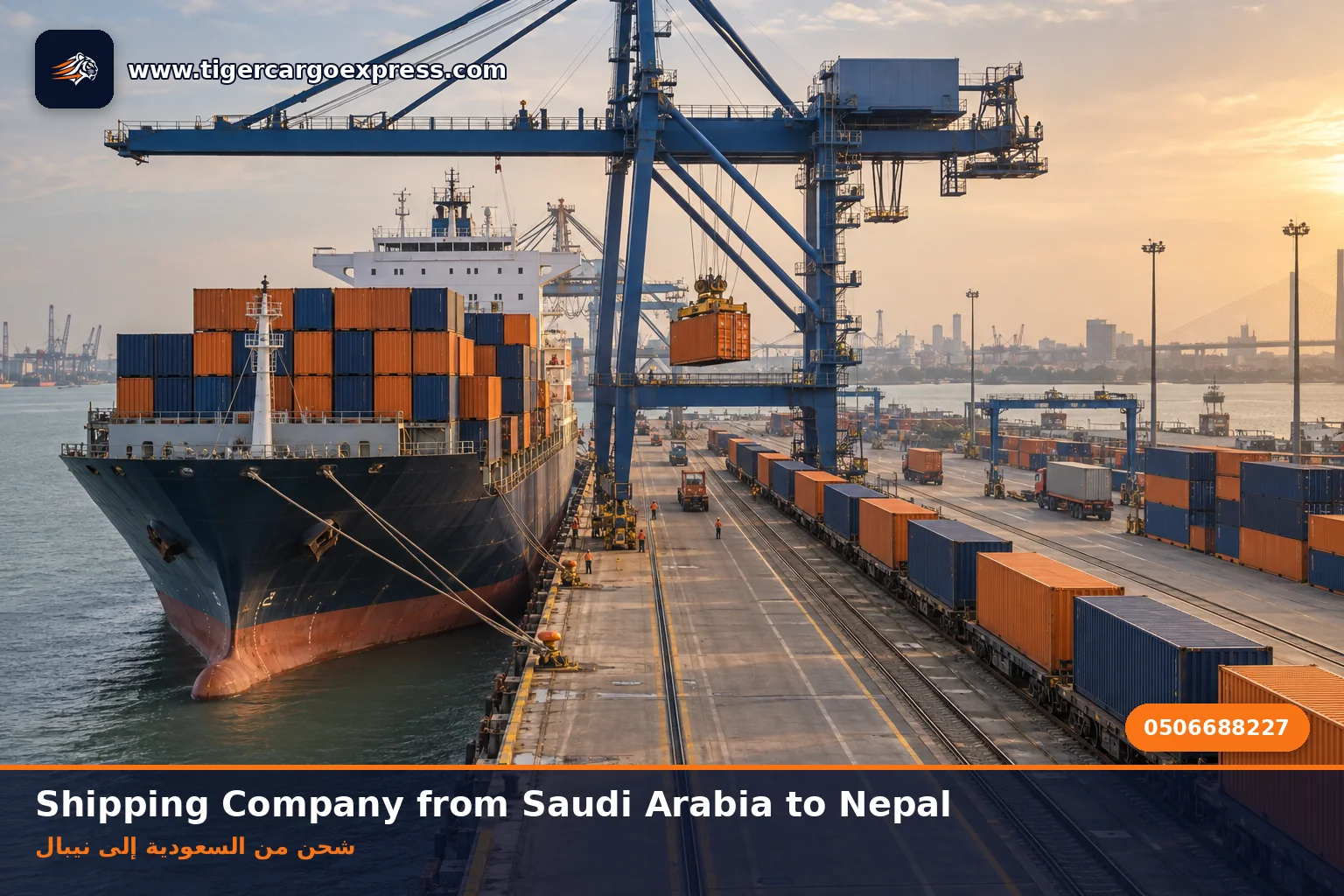
Furniture shipping from Saudi Arabia to Nepal — the deepest landlocked case in our series: your shipment crosses a fully sovereign customs territory under a bilateral treaty. It berths at an Indian port, is sealed and travels hundreds of kilometres north, then clears at Sirsiya in Birgunj. One line item follows with no parallel anywhere: an insurance policy covering Indian customs duties — which protects the transit state's treasury, not your furniture.
Guide contents ShowHide
Looking for a shipping company from Saudi Arabia to Nepal that understands a journey crossing two countries rather than one? Tiger Cargo Express ships furniture, cargo and boxes to Kathmandu, Pokhara, Biratnagar, Birgunj and the rest of Nepal — by sea, land and air, with dismantling, packing and reassembly, customs clearance, and insurance on the load. To book: 0506688227
We have met five landlocked countries in this series: Czechia, Hungary, Austria, Slovakia and Switzerland. In four of them the shipment crossed inside a single customs union. In Switzerland it crossed that union and then entered across an independent frontier.
Nepal’s case runs deeper than any of them:
Your shipment crosses a fully sovereign customs territory — India — under a bilateral treaty.
And what follows from that is a line item with no parallel in the forty-four articles before it: an insurance policy covering Indian customs duties — the duties of a country that is neither your importer nor your destination.
Your shipment berths at Kolkata, Haldia or Visakhapatnam, then travels hundreds of kilometres north across Indian territory, and is finally cleared at Sirsiya in Birgunj, inside Nepal.
What do we ship from Saudi Arabia to Nepal?
And the traffic on this lane runs the opposite way to our European lanes: mostly a journey home rather than away.
The transit treaty — how does your shipment even arrive?
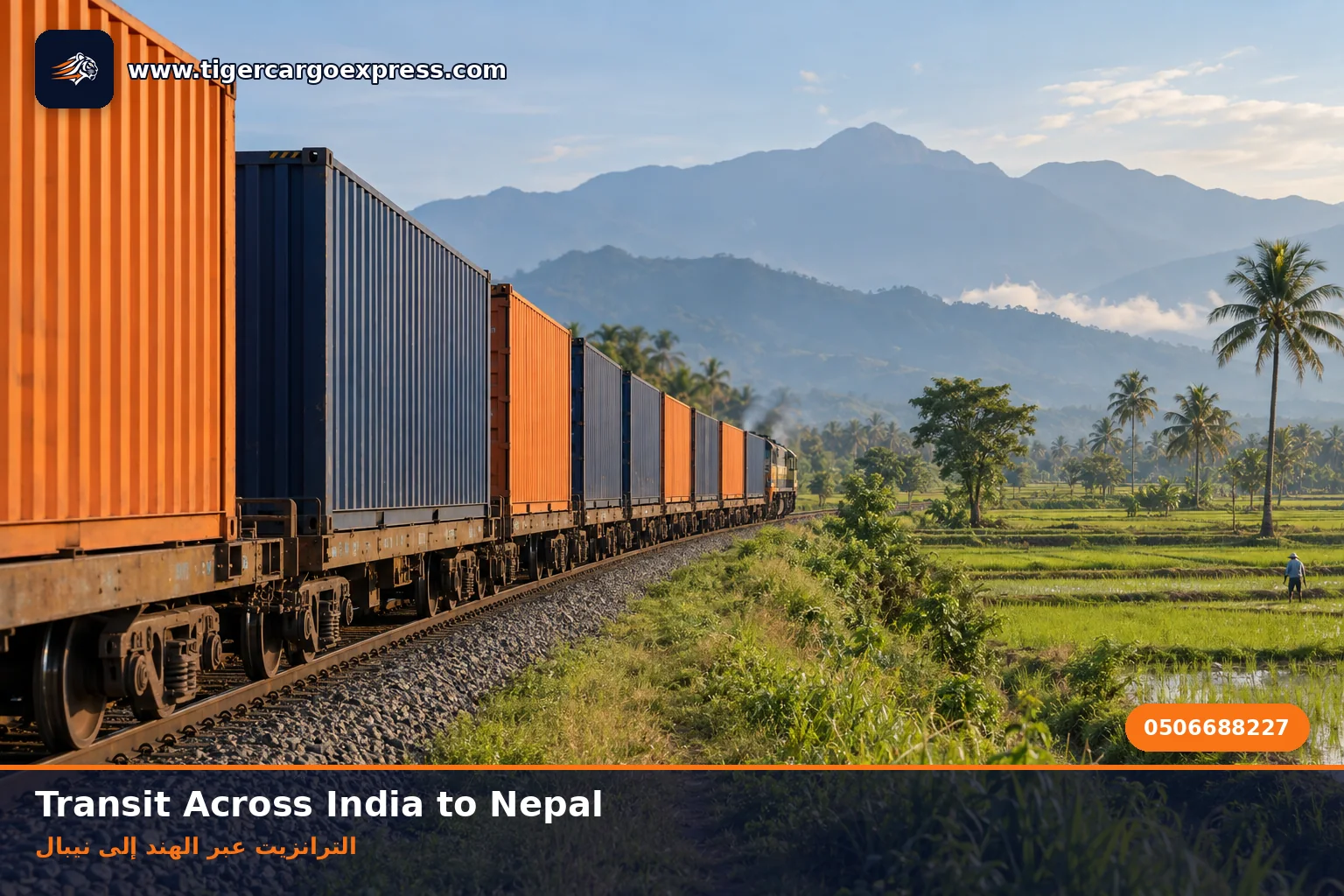
Nepal is landlocked, and its trade with third countries passes in transit across India under the India–Nepal Treaty of Transit — a bilateral agreement governing how Nepal’s goods cross its neighbour’s territory.
| Stage | Where it happens | What takes place |
|---|---|---|
| 1 — The sea leg | From our ports, eastward | No Suez Canal — days rather than weeks |
| 2 — The gateway port | Inside India | Kolkata, Haldia or Visakhapatnam — not cleared here, but sealed for transit |
| ⭐ 3 — The road or rail transit | Across Indian territory | Hundreds of kilometres north under an intact seal and duty insurance |
| 4 — The border crossing | The India–Nepal frontier | One of twenty-two approved routes — the best known being Birgunj–Raxaul |
| ⭐ 5 — Clearance | Inside Nepal | At the inland container depot at Sirsiya or another — and only here does your shipment formally enter Nepal |
When your shipment crosses Indian territory without paying Indian duties on it, a logical question arises: what if it is lost or stolen en route and never leaves the country?
It would then be foreign goods that entered the Indian market duty-free. So the transit treaty requires an insurance policy covering the value of the Indian customs duties that would have been payable had the shipment stayed there.
In practice that means you carry insurance cover in favour of a country that is not your destination. Nothing like it appears in any of our forty-four previous articles.
We arrange it and declare it as a separate line in the quote — because it is a real cost, and anyone burying it inside “general charges” is hiding the nature of your journey itself.
What we set out is the framework as we work with it in practice; the treaties and their protocols are genuinely updated — and have seen recent amendments opening new routes. Some details are decided case by case by the competent authorities in both countries. So we review the position in force with you before booking. We prepare the file and coordinate the timing — we do not provide legal or tax advice, and we do not comment on any political matter between the two states.
Gateway ports and entry points
And here is a detail found nowhere else: all of Nepal’s ports lie in another country. Nepal even has a dedicated container terminal inside the port of Kolkata.
| Point | Location | When it suits you best |
|---|---|---|
| ⭐ Kolkata / Haldia | West Bengal — India | The traditional and most used gateway — with Nepal’s own container terminal at Kolkata |
| Visakhapatnam | Andhra Pradesh — India | A second gateway opened to Nepal since 2016 — easing reliance on a single outlet |
| ⭐ Birgunj – Raxaul | The main border crossing | It alone carries around two thirds of Nepal’s trade — with the customs depot at Sirsiya |
| Bhairahawa · Biratnagar | Other inland depots | Serving the west and the east — and Biratnagar now has a direct rail link |
| Chobhar — Kathmandu | Inside the capital’s valley | Clearance near your home if you are in Kathmandu — instead of travelling to Birgunj |
| Air — Kathmandu | Tribhuvan International | It bypasses the overland transit entirely — and that, not speed alone, is its great advantage here |
The inland container depot at Sirsiya in Birgunj is the principal dry port for Nepal’s trade with third countries — and the country’s largest overland customs collection point.
But it was designed for a capacity of roughly four to five hundred containers a day, while peak arrivals exceed eight hundred.
Add to that the fact that the inland depot and the border point are run by two separate authorities — meaning review at two places rather than one.
So we schedule shipments on this lane with a wider margin than we give any other destination, and avoid peak seasons when your timetable allows. Promising a tight date here is promising something that will not be honoured.
And good news for anyone bound for eastern Nepal: a direct freight train to Biratnagar began operating in July 2026 following an amendment to the transit treaty protocol — giving Nepal a second rail outlet where Birgunj had stood alone. We review with you which suits your destination.
Shipping for embassies, consulates and their staff
And this is the most complex diplomatic file we have met in this series.
Shipments for diplomatic and consular missions and their staff do not go through the ordinary removal-goods route and are not bound by its conditions. The basis here is the status of the mission or of your accreditation with it in Nepal.
At every previous destination the diplomatic file needed one authority: the receiving state’s. Here it needs arrangements with two:
▸ The diplomatic exemption in Nepal — the destination and the granter of status.
▸ And the transit procedure across India — a country of passage that granted no status and has no part in it.
The decisive point: the mission’s status in Nepal does not exempt the shipment from completing the transit procedure across Indian territory. The road is the road, and the procedure is the procedure.
So what we guard most closely in these files is keeping the seal intact from the port to the destination, and documenting every stage — because the file is read by two different authorities, each with its own logic.
- ▸ We arrange both tracks together from the start: the Indian transit procedure and the Nepalese exemption — not one and then the other.
- ▸ We keep the seal intact from the gateway port to the clearance point and document every stage.
- ▸ We start with the competent department, not the individual — the official correspondence is the foundation of the file.
- ▸ We match consignee name and title between the correspondence and the bill of lading word for word before issuing it.
- ▸ We allow a wider time margin because the file passes review at two points rather than one.
- ▸ We handle everything in confidence — information, contents and movement schedules alike.
And we are clear: what the exemption covers and how far it extends is for the competent authorities in the receiving state to determine, and the mission has its own official channels. Our role is purely logistical. We work in both directions: foreign missions in the Kingdom, and Saudi missions in Kathmandu.
Car shipping — and why we usually advise against it
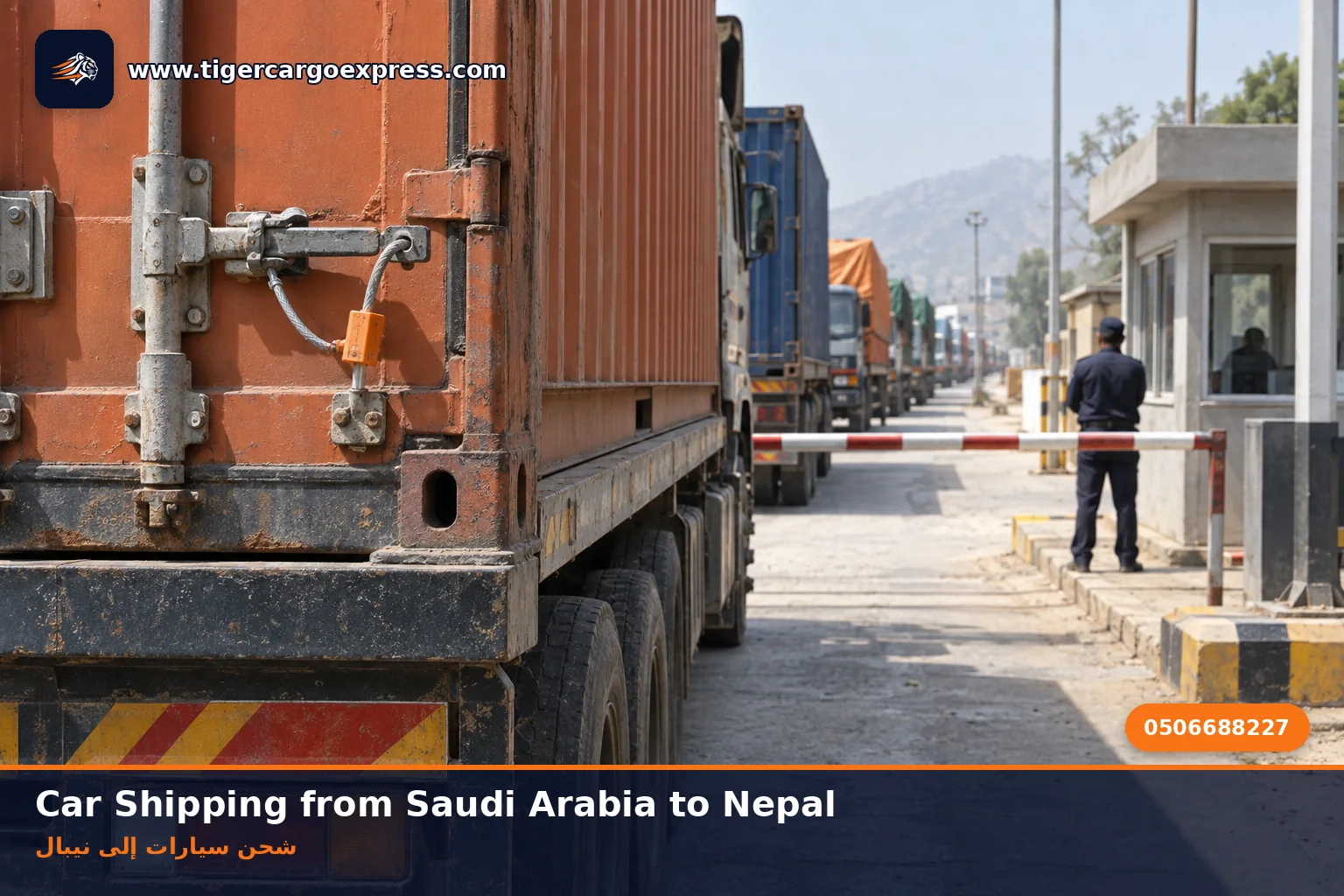
We say it plainly: shipping a vehicle to Nepal combines two difficulties in one file.
The first — the journey itself. The vehicle must cross another country’s territory under a transit procedure with an intact seal and duty insurance, then pass the congested border crossing, then clear inland. This is the longest vehicle route in our entire series.
The second — the duties. Vehicle import duties in Nepal are among the highest we have met, made of successive layers rising with engine capacity and vehicle class.
The result is that the freight itself may be the smallest line on the bill — a fact you should know before booking rather than after.
Our advice to most clients: compare the full calculation against the price of an equivalent car there. In most cases selling here works out cheaper — and we say so even when it costs us the largest line in the quote.
And a geographic note: Nepal’s mountain roads are narrow and winding, and the final leg to some destinations may need a smaller delivery vehicle. We cost that in advance rather than on delivery day.
Furniture moving from Saudi Arabia to Nepal
And packing here is built for a longer, more heavily handled journey than any other destination in the group.
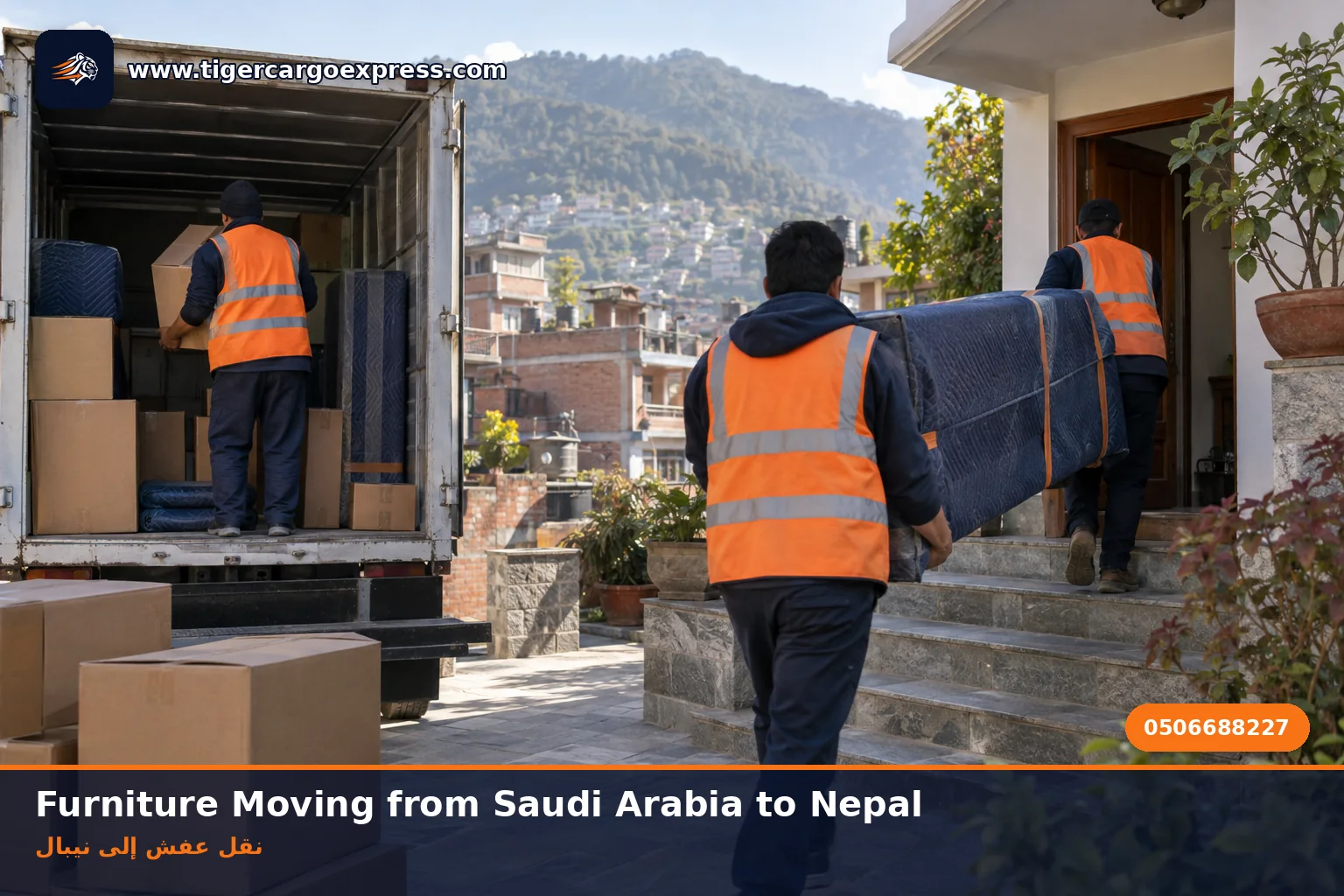
Your shipment is handled at the port, at the transfer to rail or truck, at the border crossing, at the inland depot, and at delivery. That is a number of stages found on no other lane we operate — and we pack to it by default.
- ▸ Survey and assessment: volume in cubic metres — even if it is a few boxes, because we serve small consignments, not only containers.
- ▸ Packing built for five handlings: the single most important difference on this lane — stronger cartons, firmer bracing, protected edges.
- ▸ Clear numbering matched to the inventory: more necessary here than anywhere — the file is reviewed at two points.
- ▸ A detailed valued inventory: written as we work and handed over before sailing — it is the basis of both clearance and the transit procedure.
- ▸ Professional dismantling: bedrooms, kitchens and wardrobes — full dismantling cuts volume, and volume is your invoice.
- ▸ Protection against humidity and dust: a long journey across hot humid plains and then up to altitude — with moisture absorbers in every box.
- ▸ Unpacking and reassembly: in your new home, with an inventory check piece by piece.
Ways to ship — sea and air
Because in Nepal the calculation is not a comparison of two prices alone. Air here saves you: the transit procedure, the Indian duty insurance, the border queue, and the congestion at Sirsiya.
So the real gap between sea and air on this lane is smaller than the headline figures suggest — especially for small and medium consignments.
We work out the full cost of each route with all its lines, not the freight rate alone. Comparing a rate per kilo with a rate per cubic metre here is a misleading comparison.
Expected transit — three stages, not one
This is a question we answer differently here from all our other destinations. On every other lane you ask “how many days?” and we give you a number. Here a single number hides more than it explains.
The first stage is relatively fixed; the second and third are what move — with the season, with how ready the file is, and with congestion at the crossing and the depot.
Anyone giving you a single categorical number on this lane either does not know the route, or knows it and is promising what they do not control.
We write out the three stages separately with a range for each, and state plainly which can be accelerated and which cannot. There is one stage we genuinely control: having the transit file ready before berthing — and on that we commit.
Full container, shared load or boxes?
| Aspect | Full container | Shared load | Boxes ⭐ |
|---|---|---|---|
| When it suits you | A whole home or a vehicle | A room or two plus appliances | Personal effects and gifts — the most requested here |
| ⭐ And the transit procedure | Crosses under a single seal — the cleanest arrangement for transit | Crosses in a consolidated container then is broken down — extra handling | And air bypasses transit entirely — an advantage of its own |
| Transit time | Shortest by sea — but the overland stage cannot be shortened away | Longest — consolidation and deconsolidation on top of the transit | By air: by far the fastest on this lane |
| Pricing | A fixed rate plus the transit lines | Per cubic metre plus a share of the transit lines | Per box or by weight |
Note the second row — what sets this table apart from its counterparts in the earlier articles. The question here is not only “how big is your load?” but “how will your shipment cross another country?”. A full container crosses under one clean seal, a shared load adds handling, and air removes the stage altogether.
Nepalese cities we cover
Door delivery from the Terai in the south to the Kathmandu valley and the hills.
Pokhara
Lalitpur
Biratnagar
Birgunj
Bharatpur
Janakpur
Hetauda
Dhangadhi
Butwal
Nepalgunj
Dharan
Siddharthanagar
Tulsipur
Itahari
Kirtipur
Shipping prices from Saudi Arabia to Nepal
Indicative figures — the final quote is built on the survey and the transit route chosen.
| Shipment type or line | Price range | Unit and notes |
|---|---|---|
| ⭐ Boxes and small consignments | Request a quote — set by survey | Per box or by weight — the most requested service on this lane |
| Shared load (LCL) | Request a quote — set by survey | Per cubic metre with a minimum |
| 20ft / 40ft container | Request a quote — set by survey · Request a quote — set by survey | A mid-sized flat or a full house — and it crosses under one seal |
| ⭐ Air freight | Request a quote — set by survey | By volumetric weight — and it removes both the transit and insurance lines |
| ⭐ Transit across India | Set in the quote, by your destination | A whole stage inside another country — a line found in no other article |
| ⭐ Indian duty insurance | Set after your file is reviewed | A policy required by the transit treaty — declared, not buried |
| Clearance and inland haulage | Set in the quote, by your destination · Set in the quote, by your destination | At Sirsiya or Chobhar, then to your door over mountain roads |
Note the fifth and sixth rows — two lines that appear in none of our forty-four previous articles. Your journey crosses another country, and that is a real cost with a name. Anyone giving you an “all-in price” without separating the transit line and the insurance line is not explaining your journey but concealing it.
What actually sets your price?
Documents required
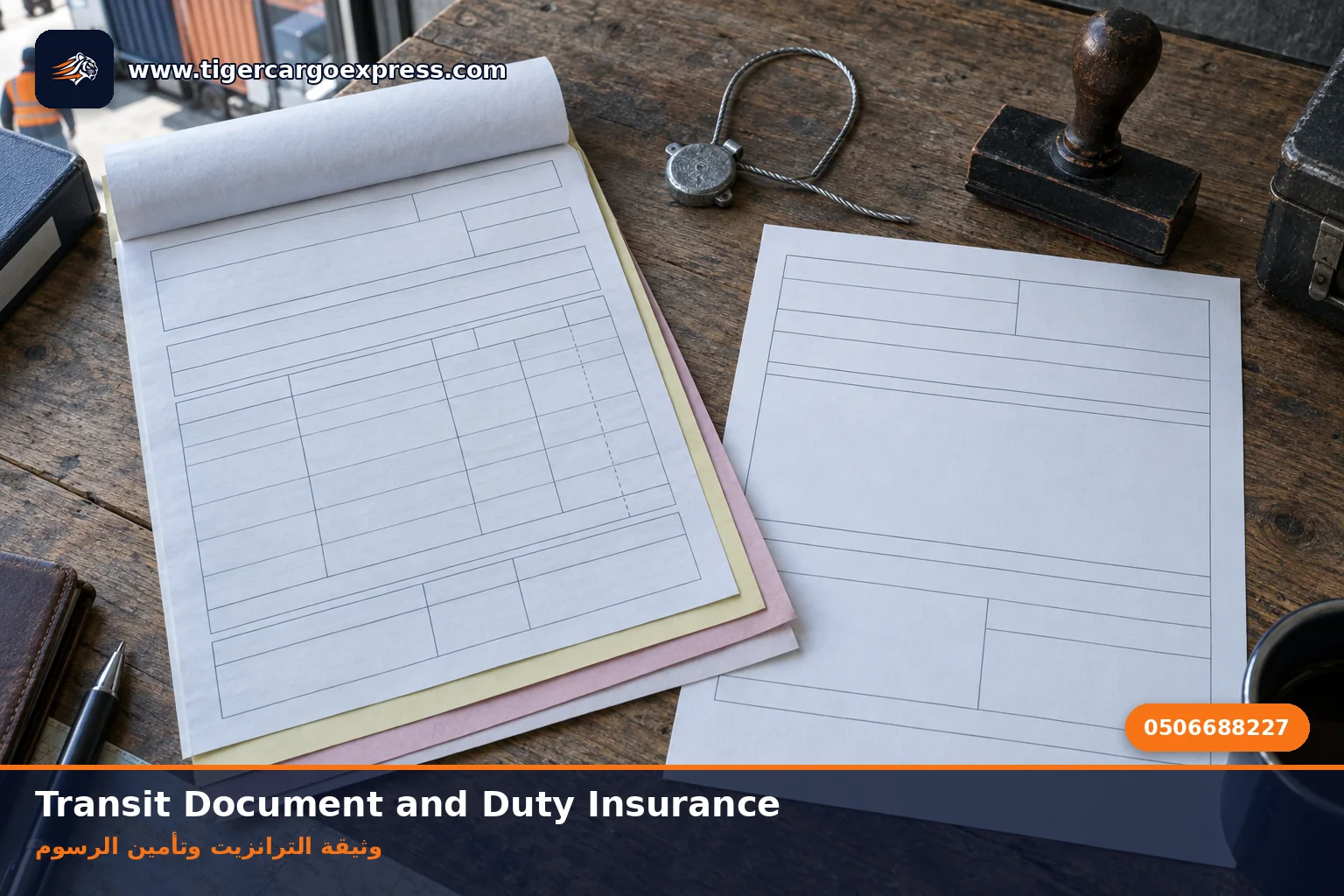
This is Nepal’s complexity in one line: your shipment carries two parallel files — one for entering Nepal, and one for crossing India.
The second has nothing to do with you or your destination; it is an arrangement between two states governing how your goods pass. But it stands in your way if it is not prepared correctly.
We prepare them together and at the same time — not one and then the other after berthing. Preparing the transit file after the vessel arrives is the single biggest cause of delay on this lane.
Clearance and standing charges
We handle clearance. A container has a limited free period at the gateway port starting from discharge rather than from your notification, after which a daily charge applies for it remaining and another for late return to the shipping line.
Which is more than at any other destination in our series: at the gateway port while the transit is arranged, at the border crossing in the waiting queue, and at the inland depot if it is congested.
So the most valuable thing we bring to this lane is not a lower price but arranging things in advance: preparing the transit file before berthing rather than after, booking the rail or road move early, and choosing a timing that avoids the Sirsiya peak.
One day of organisation here saves more than any discount on the freight rate.
Prohibited and restricted items
- ▸ A note specific to Nepal: your shipment is subject to the restrictions of two countries — India’s transit rules and Nepal’s import rules. Anything prohibited in either one stalls the journey.
- ▸ Flammables and pressurised goods: aerosols, paints, solvents, fuel and gas — excluded entirely.
- ▸ Alcohol: outside the relief and under its own duty regime — we do not include it in household shipments.
- ▸ Weapons, ammunition and replicas: including souvenirs — under strict permit regimes in both countries.
- ▸ Gold and precious metals: under their own declaration regime — and particularly sensitive in transit cargo.
- ▸ New goods in quantity: treated commercially rather than as personal effects.
- ▸ Food, plant and animal products: restricted under sanitary and phytosanitary controls in both countries.
- ▸ Untreated timber: every crate and pallet needs approved treatment.
Packing and insurance
And we have explained the reason for the extra rigour: five handling stages, and a journey crossing hot humid plains before climbing into a mountain climate.
This is a common and expensive confusion. The Indian duty insurance protects the Indian treasury, not your furniture. It is a condition of transit, not compensation for you.
Cargo insurance is what compensates you if your shipment is damaged or lost — and it is an entirely separate policy.
Anyone telling you “the shipment is insured” without making clear which of the two they mean may leave your furniture uncovered while you believe otherwise. We separate the two lines and declare both.
Inland delivery after clearance
- ▸ From the Terai to the hills: the road from Birgunj to Kathmandu climbs and winds — and takes longer than the distance suggests.
- ▸ Clearing at Chobhar saves a stage: if you are in the Kathmandu valley — and we recommend it in that case.
- ▸ Narrow mountain roads: which may require a smaller vehicle for the final leg — costed in advance.
- ▸ The monsoon: June to August affects the mountain roads — but it is a quieter season at the ports.
- ▸ Buildings without lifts: costed in advance by the number of floors, not discovered on delivery day.
The reverse direction — Nepal to Saudi Arabia
We work both directions on the same routes. The dominant traffic out of Nepal is carpets, handwoven textiles, handicrafts, tea, spices and herbal products, alongside the effects of those arriving for work in the Kingdom.
And note that the transit logic applies in the reverse direction too: an export from Nepal begins with an inland procedure and then crosses India to the gateway port. We review your list before loading because Saudi import restrictions follow their own logic, particularly for plant and herbal products.
How to choose a shipping company to Nepal
Our written guarantees
How to lower the cost of your shipment
- ▸ Compare the two routes at their full cost. Air removes the transit, the insurance and the crossing — and the real gap is smaller than it looks.
- ▸ Avoid the Sirsiya peak if your timetable allows. The days saved here are worth more than any discount.
- ▸ Ask about clearing at Chobhar if you are in the Kathmandu valley — it may save you a whole mountain leg.
- ▸ Settle the vehicle decision with arithmetic. Its journey is longer and its duties among the highest — selling here may be cheaper.
- ▸ Do not ship a container when you need half of one. Shared loads and boxes are genuine options here.
- ▸ Allow full dismantling. It cuts volume appreciably, and volume is the invoice.
- ▸ Sort before you pack. Every cubic metre is paid for here three times over: by sea, in transit and by road.
When do rates rise and transits lengthen?
| Period | What happens |
|---|---|
| December – February | The most congested period on this lane — with Sirsiya at its limit. We avoid it when your timetable allows. |
| The autumn festival season | October–November — heavy pressure before the major festivals, and an administrative pause during them. |
| ⭐ June – August | The quietest period at the crossings and depots — though the monsoon slows the mountain roads. It can be good timing if the hill delivery is not urgent. |
| Gateway port congestion | Your shipment is affected by congestion at an Indian port, not a Nepalese one — a double exposure with no parallel. |
| Disruption on sea lanes | Moves rates generally — though its effect is smaller here because we do not pass through the Suez Canal. |
How we work: five steps
Five recurring mistakes — all avoidable
- ▸ Preparing the transit file after berthing. The mistake most specific to Nepal — and the single biggest cause of delay on this lane.
- ▸ Confusing the two insurances. The Indian duty insurance does not compensate you if your furniture is damaged.
- ▸ Accepting a quote with no declared transit line. A whole stage inside another country is not a “general charge”.
- ▸ Shipping in the December–February peak without need. Sirsiya is at its limit then.
- ▸ Comparing air with sea on the freight rate alone. Air removes the transit, the insurance and the crossing.
Why Tiger Cargo Express?
Because we treat your journey as what it is: a journey across two countries, not one. So we prepare the entry file and the transit file together before berthing rather than after, and declare the transit line and the Indian duty insurance line openly instead of burying them in “general charges”.
And we distinguish for you between insurance that protects your furniture and insurance that protects the transit state’s treasury — because confusing them can leave you uncovered while you believe otherwise. And we give you a realistic time margin rather than a tight promise, because anyone who has not heard of the congestion at Sirsiya is promising a date they will not honour.
Frequently asked questions about shipping from Saudi Arabia to Nepal
In summary
Nepal is the deepest landlocked case in our series: your shipment crosses a fully sovereign customs territory under a bilateral treaty. It berths at an Indian port, is sealed and travels hundreds of kilometres north, enters through one of twenty-two approved routes, and is then cleared at Sirsiya or Chobhar. Two line items follow that have no parallel: the transit, and an insurance policy covering Indian duties — which protects the transit state’s treasury, not your furniture, so do not confuse it with your cargo insurance. Three things matter here: a transit file prepared before berthing, declared lines rather than buried ones, and a realistic time margin. Tiger Cargo Express gives you all three before you ship.
Send your shipment details — approximate volume, origin city and your city in Nepal, and whether you prefer sea or want it compared against air — and we reply with a detailed quote showing every line within 60 minutes. 0506688227
Where does Nepal sit on our map?
Shipping to Nepal is one lane within a wider region — and the full Asia guide explains the rules governing it and its neighbours together: the route, the customs framework, and the challenge that lane is priced around.
Related Shipping Guides
Continue with practical guidance connected to the same route or shipping decision.
Furniture and Car Shipping Company from Saudi Arabia to the Gulf 0506688227
⚠️ "How much does shipping to Kuwait cost?" is a question missing three things. Shipping from Riyadh is not shipping…
Shipping Company from Saudi Arabia to the Middle East 0506688227 — Overland Guide
The Middle East overturns all of it: it is the only destination whose journey starts at your front door rather…
Shipping Company from Saudi Arabia to Oceania 0506688227 — The Biosecurity Guide
On every preceding continent the question was: what is inside your shipment? Oceania asks an entirely different one: what is…
Send your shipment details and get a written quote
We reply within 60 minutes during working hours — with what the price includes and what it does not, stated before you commit.