
Furniture Shipping Company from Saudi Arabia to Indonesia 0506688227 Relief Is One Gate, Permission Is Another
Furniture shipping from Saudi Arabia to Indonesia — the destination where your shipment passes through two gates, not one: the duty gate asking "how much do you pay?", and the prohibition and restriction gate asking "does it get in at all?". You can win full relief and still have your goods held. Its rules recently changed: the 2025 regulation in force since June, a ninety-day window in both directions, and electronic filing. Vehicles are excluded from the scheme — but "excluded" is not "banned".
Guide contents ShowHide
Looking for a shipping company from Saudi Arabia to Indonesia that knows the difference between your goods being exempt and your goods being permitted? Tiger Cargo Express ships furniture, cargo and boxes to Jakarta, Surabaya, Medan, Bandung and the rest of Indonesia — by sea and air, with dismantling, packing and reassembly, customs clearance at both ends, and insurance on the load. To book: 0506688227
The route here heads east through the Strait of Malacca — one of the busiest maritime corridors in the world — and does not pass through the Suez Canal.
What sets Indonesia apart from every destination before it in our series is this:
You can win full relief from duty and still have your goods refused entry.
The Indonesian system separates two entirely independent layers: the duty layer — the one everybody talks about — and the prohibition and restriction layer that sits above it.
Clearing the first says nothing about the second. So our question to you is not only “do you qualify for relief?” but “and are your goods permitted at all?”
What do we ship from Saudi Arabia to Indonesia?
And the traffic on this lane runs the opposite way to our European lanes: mostly a journey home rather than away.
The two layers — relief and permission
At every destination before this one the question was single: do you qualify for relief? Answer it and your shipment enters. Here, answering it is not enough on its own.
| Aspect | Layer one — duty | ⭐ Layer two — prohibition and restriction |
|---|---|---|
| The question it answers | How much do you pay? | Does it get in at all? |
| What it examines | Your status, your time abroad and the arrival window | The nature of the item itself, its permits and technical standards |
| Who decides | Customs | Several regulatory bodies, depending on the item |
| ⭐ How they relate | Clearing it does not mean clearing the second | Sits above the first — and applies even with full relief |
You may be an Indonesian returning after ten years, with a complete file, a correctly timed window, and relief from duty beyond dispute.
And your shipment still stops — not because you fail to qualify for relief, but because one item inside it needs a permit or a certificate of conformity that nobody thought to ask for.
The trouble is that most of what is written about shipping to Indonesia explains the first layer alone. We review both layers together against your list before packing, not after berthing.
Relief is one gate; permission is another — and both must open.
And “excluded” does not mean “banned”
Certain items are expressly excluded from the moved-goods scheme and take no benefit from its relief:
▸ Motor vehicles — cars and motorcycles
▸ Air and water transport — aircraft and speedboats
▸ Spare parts
But “outside the scheme” and “banned from entry” are entirely different things. These items can enter — on a different customs route and at full duty, just not within your household shipment.
So we separate them into their own file from the outset, because including them in the household list stalls the whole shipment, not just them.
The new regulation and its conditions
This is a lane whose rules genuinely and recently changed. Minister of Finance Regulation No. 25 of 2025 on the customs provisions for importing moved goods was issued on 28 April 2025 and came into force on 27 June 2025 — replacing the 2008 regulation people had worked under for seventeen years.
Because most of our destinations restrict one direction: India and Bangladesh prohibit the shipment arriving before its owner outright, and the Philippines gives you sixty days after your return only.
Here the window is ninety days before your arrival and ninety after it — more planning room than you will find almost anywhere in the region.
But note: a wide window does not mean the port stops charging for standing. A container berthing eighty days ahead of you is inside the window and standing for eighty days at the same time.
So we use it as a safety margin, not waiting space — and time the berthing close to your arrival.
What we set out is the framework as we work with it in practice. Indonesia is among the most active destinations in updating its rules — both the moved-goods regulation and the passenger-baggage regulation changed in 2025. Some details are decided case by case by the competent authority. So we review the position in force with you before booking. We prepare the file and coordinate the timing — we do not provide legal or tax advice.
Shipping for embassies, consulates and their staff
The only category here that sits outside both layers.
Shipments for diplomatic and consular missions and their staff do not pass through the moved-goods route and are not bound by its conditions — not the twelve-month rule, not the ninety-day window, not filing through the special declaration route. The basis here is the status of the mission or of your accreditation with it, and the reference framework is the Vienna Convention on Diplomatic Relations of 1961.
We explained above that every ordinary shipment passes through two gates: the duty gate and the permission gate.
A mission file is not read through that logic at all. The mission’s status precedes both layers and does not pass through them, and treatment is settled through the official diplomatic channel rather than by item classification.
The first question here becomes: “what is the consignee’s status, and who corresponds with us officially?” — not “is this item restricted?”
So we begin these files with the competent department rather than the individual, and schedule the sailing around when the correspondence is complete rather than when the furniture is ready.
- ▸ We settle the status first and build the file on it — not the other way round.
- ▸ We do not put mission cargo through the moved-goods route nor apply a condition that does not concern it.
- ▸ We start with the competent department, not the individual — the official correspondence is the foundation of the file.
- ▸ We match consignee name and title between the correspondence and the bill of lading word for word before issuing it.
- ▸ We document the inventory to a higher standard and hand it over endorsed by both sides.
- ▸ We handle everything in confidence — information, contents and movement schedules alike.
And we are clear: what the exemption covers and how far it extends is for the competent authorities in the receiving state to determine, and the mission has its own official channels. Our role is purely logistical. We work in both directions: foreign missions in the Kingdom, and Saudi missions in Jakarta.
Car shipping — outside the scheme, not outside the country
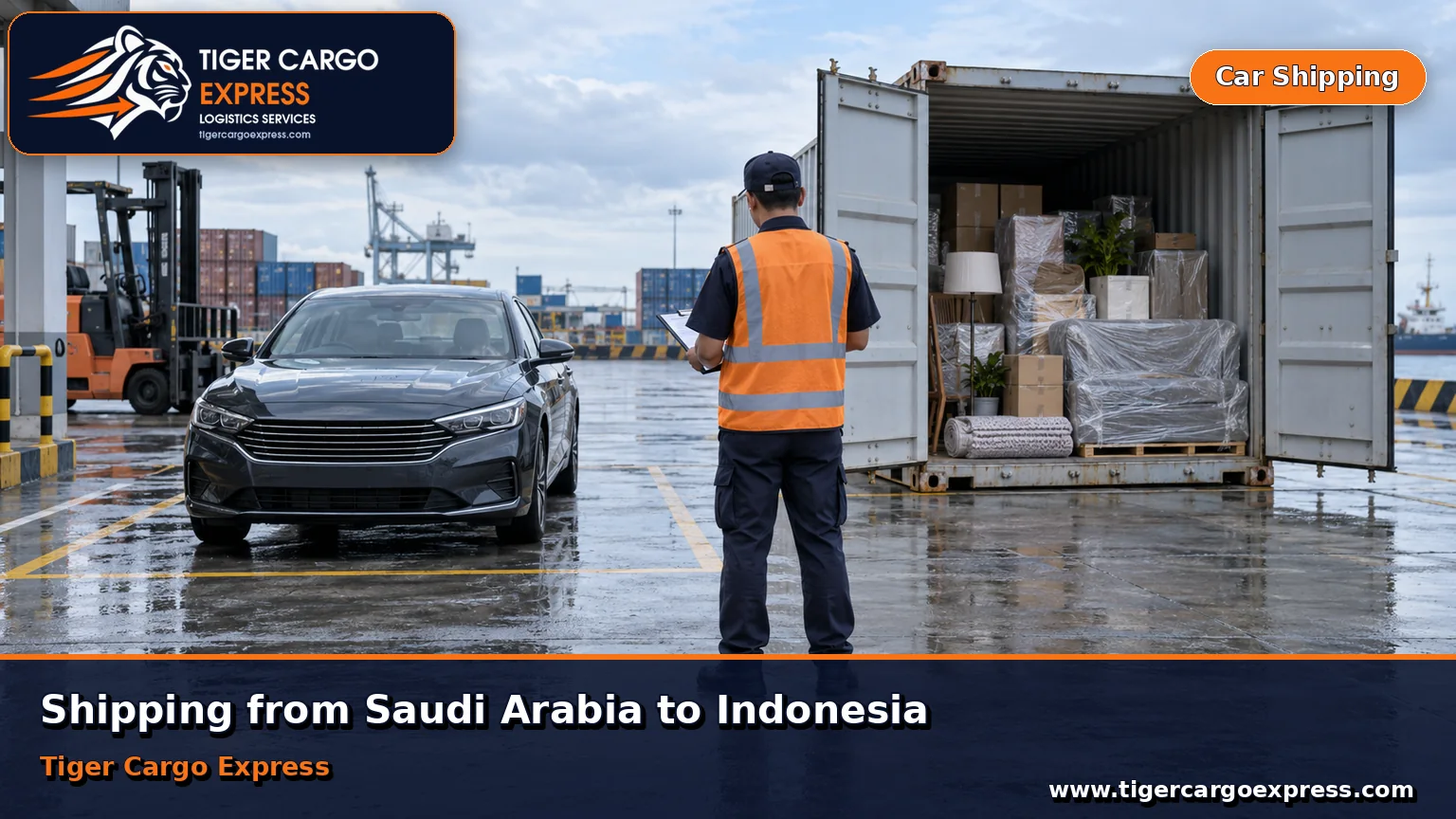
Here is a detail many people get wrong, and it stalls their entire shipment.
The moved-goods regulation sets out an express exclusion for motor vehicles — cars and motorcycles — together with air and water transport and spare parts.
So a vehicle takes no benefit from this scheme’s relief however long you were away, however complete your file, and however well timed your window.
But — and this is the decisive distinction — “excluded from the scheme” is not “banned from entry”. A vehicle can enter on an independent customs route at full duty and tax, under import and registration requirements of its own.
The fatal mistake is listing the vehicle within the household inventory in a single file. Then it is not the vehicle alone that stalls — the entire shipment stalls with it.
So we separate the two files from the first phone call. Then we review the model, year of manufacture and engine capacity with you, add the freight to the duties, and set the total against the price of an equivalent car there. And if it is not worth it, we say so even when it costs us the whole line.
Furniture moving from Saudi Arabia to Indonesia
And the inventory here is read twice: once for duty and once for permission.
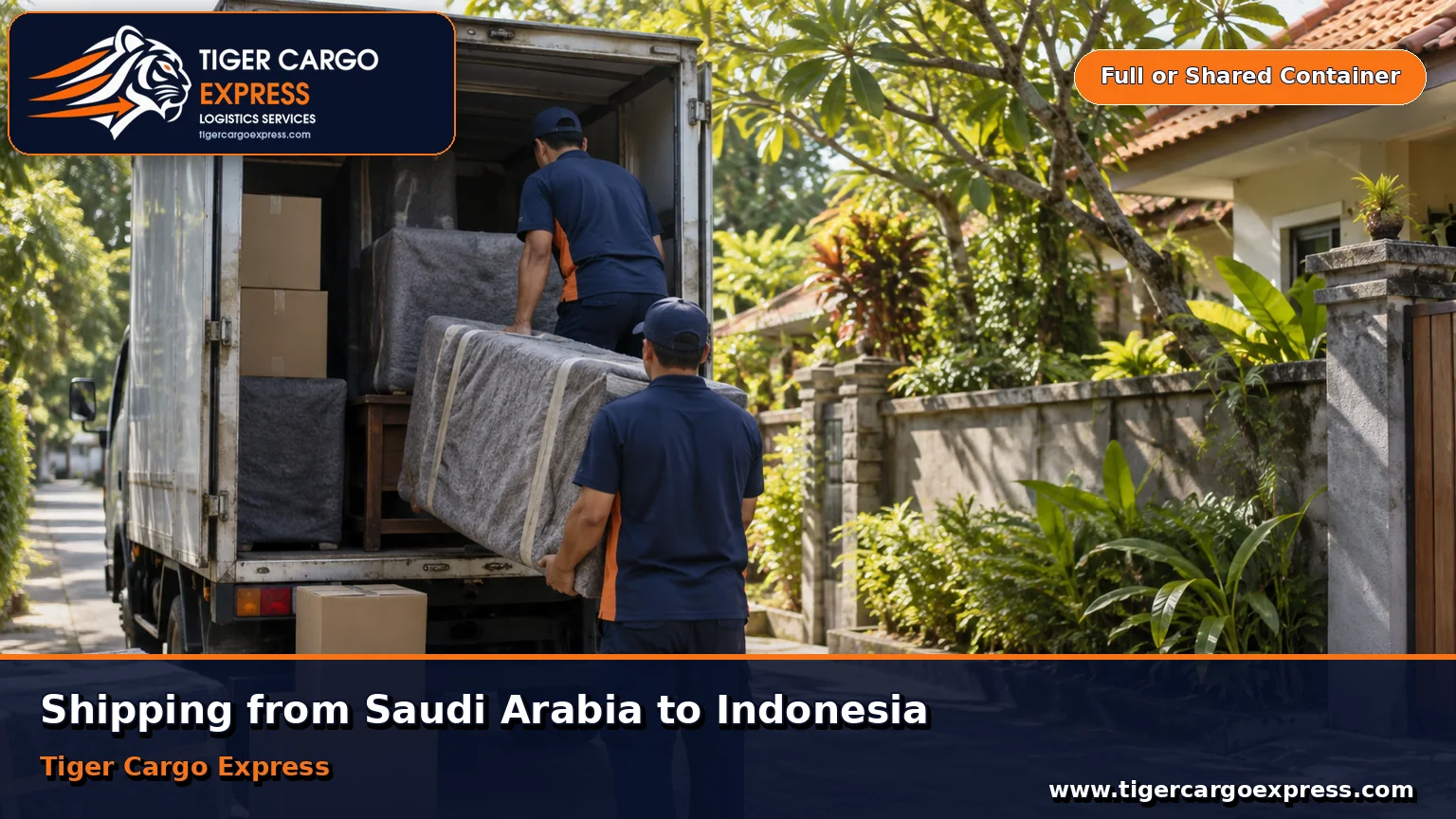
The inventory we write for you is not one sheet with one purpose. Customs read it to assess duty, and its items are read to determine what needs a permit. An inventory written in general terms hides the restricted item until it appears at the opening — and by then the container is in the yard and the meter is running.
- ▸ Survey and assessment: volume in cubic metres — even for a few boxes, because we serve small shipments, not containers only.
- ▸ ⭐ Screening layer two first: we go through your list item by item and isolate whatever needs a permit or certificate — before packing.
- ▸ Separating the vehicle into its own file: where there is one — mixing it with the household goods stalls both.
- ▸ A detailed inventory with precise descriptions: not “assorted electronics” but the item, model and quantity, because a general description hides the restricted one.
- ▸ Professional dismantling: bedrooms, kitchens and wardrobes — full dismantling cuts volume, and volume is your invoice.
- ▸ Protection against tropical humidity: Indonesia is humid year-round — with moisture absorbers in every box.
- ▸ Unpacking and reassembly: in your new home, with an inventory check piece by piece.
Ports of entry
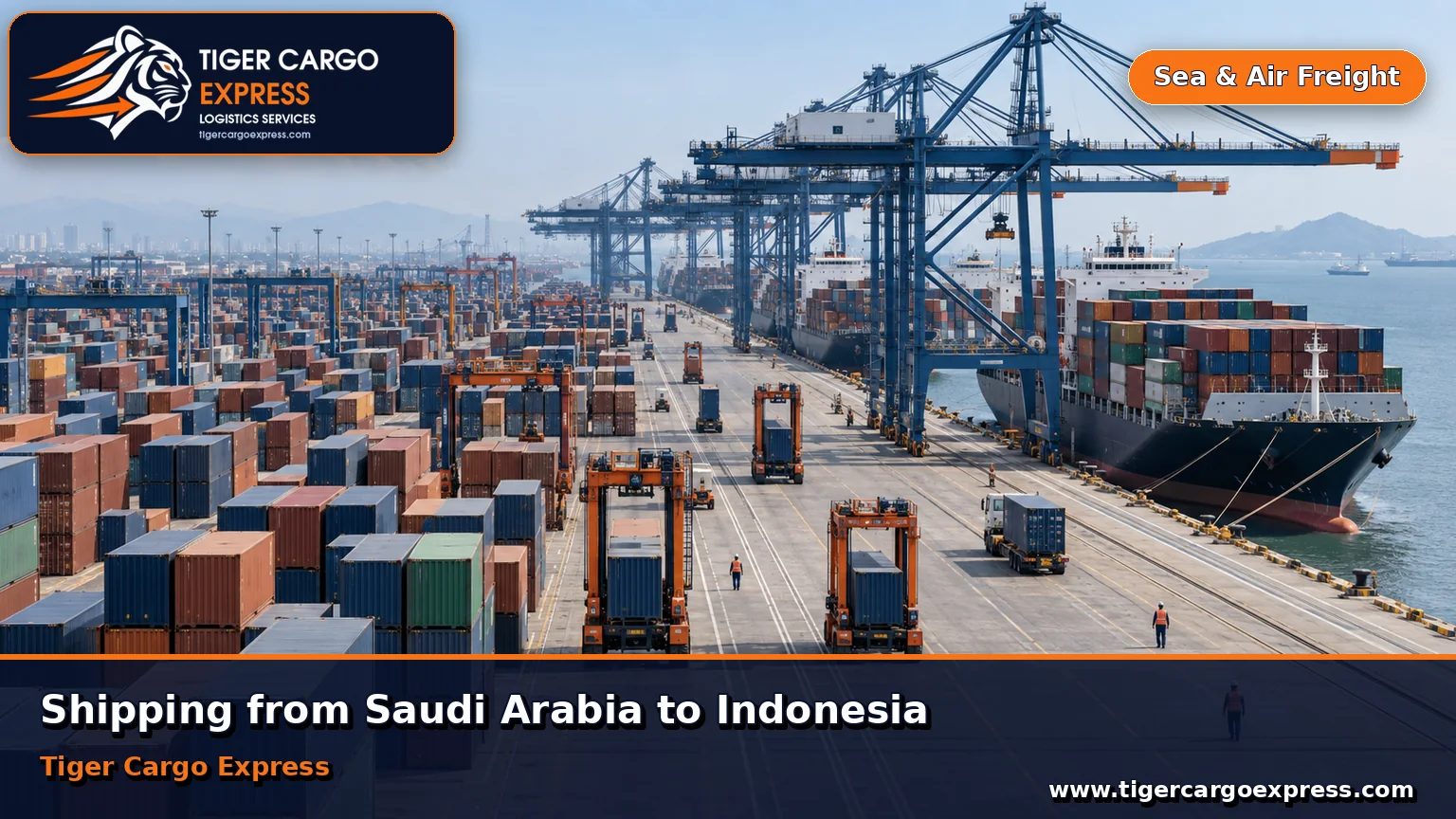
| Port | Location | Best for |
|---|---|---|
| ⭐ Tanjung Priok | Jakarta — West Java | The main port with the most frequent schedules — serving the capital and western Java |
| Tanjung Perak | Surabaya — East Java | Saves hundreds of kilometres for the east, eastern Java and Bali |
| Belawan | Medan — North Sumatra | The logical choice for Sumatra — instead of routing through Java |
| Tanjung Emas | Semarang — Central Java | Central Java and Yogyakarta — depending on the line’s schedule |
| Air — Jakarta | The international airport | Urgent and small — and for timing the ninety-day window precisely |
Indonesia is the largest archipelago in the world, so the port choice here is a real decision: anyone living in Surabaya or Medan whose shipment routes through Jakarta pays for a long inland leg that could have been avoided. We weigh the port by your island and your city, not by what is convenient for us.
Ways to ship — sea and air
Alongside the moved-goods scheme there is a separate regime for accompanied passenger baggage, whose regulation also issued in 2025.
It gives each passenger relief on personal effects up to five hundred dollars of free-on-board value. Anything above that attracts duty at ten per cent on the excess together with value added tax.
This is an entirely different regime with no bearing on your household shipment — but knowing it helps you decide what to carry with you and what to send in the container.
Full container, shared load or boxes?
| Aspect | Full container | Shared load | Boxes |
|---|---|---|---|
| When it suits you | A whole home | A room or two plus appliances | Limited personal effects |
| ⭐ Exposure to layer two | One restricted item stops your container alone | The risk is greater here — someone else’s list can affect your schedule | Least exposed — fewer items, easier to screen |
| Inspection and attendance | You or your representative at the opening | More complex to coordinate — several owners in one container | Simplest procedurally |
| Pricing | A fixed container rate | Per cubic metre with a minimum | Per box or by weight |
Note the second row — a consideration that appears at no other destination with this clarity. The restriction layer operates at item level, not shipment level, and a single item needing a permit is enough to stop the container. On a shared load an error in someone else’s list can delay you — and we say so plainly before you choose.
Indonesian cities we cover
Door delivery across Java, Sumatra, Sulawesi, Bali and in between.
Surabaya
Bandung
Medan
Semarang
Makassar
Palembang
Pekanbaru
Denpasar
Yogyakarta
Malang
Batam
Pontianak
Banjarmasin
Bandar Lampung
Samarinda
Shipping prices from Saudi Arabia to Indonesia
Indicative figures — the final quote is built on the survey and your delivery city.
| Shipment type or line | Price range | Unit and notes |
|---|---|---|
| Boxes and small shipments | Request a quote — set by survey | Per box or by weight |
| Shared load (LCL) | Request a quote — set by survey | Per cubic metre with a minimum |
| 20ft / 40ft container | Request a quote — set by survey · Request a quote — set by survey | A mid-sized flat or a full house |
| Air freight | Request a quote — set by survey | By volumetric weight — and it times the window precisely |
| ⭐ Electronic filing and clearance | Set in the quote, by your destination | Preparing the file, filing it electronically and following it to release |
| ⭐ Layer-two permits | Set after your file is reviewed | A line with no parallel — it appears only if your list holds a restricted item |
| ⚠️ The vehicle file | Set after your file is reviewed | Entirely separate from the household file — at full duty outside the relief |
Note the last two rows. The permit line appears or disappears according to your list — and we cannot estimate it before seeing that list item by item. Anyone giving you an “all-in price” before reading your list is pricing layer one alone.
What actually sets your price?
Documents required
First: how long were you resident outside Indonesia, and when do you arrive? — this settles layer one: whether you qualify for relief and whether your shipment falls inside the window.
Second — and more important: what exactly is on your list? — this settles layer two: whether anything on it needs a permit.
And we ask for the list with precise descriptions, not general ones. “Assorted electronics” and “personal effects” are phrases that hide the restricted item until it appears at the opening — and by then the container is in the yard and the meter is running.
Clearance and standing charges
We handle clearance at both ends. A container has a limited free period at the arrival port starting from discharge rather than from your notification, after which a daily charge applies for it remaining and another for late return to the shipping line.
For a reason particular to this destination: because the hold-up is usually in layer two, not layer one.
A duty file can be corrected with a document or a figure. But an item needing a permit from a regulatory body takes a review outside customs to release — and the container waits in the yard throughout.
So the most valuable thing we offer on this lane is not a lower rate but early screening: we read your list before packing, isolate whatever needs a permit, and decide with you whether to ship it with its permit or leave it.
An hour of review before packing saves weeks of standing after berthing.
Prohibited and restricted items
This section matters more in Indonesia than at any other destination — because it is not a general warning but layer two itself.
- ▸ Flammables and pressurised goods: aerosols, paints, solvents, fuel and gas — excluded entirely.
- ▸ Alcohol: outside the scope of the relief and under its own regime — we do not include it in household shipments.
- ▸ Weapons, ammunition and replicas: including souvenirs — under a strict permit regime.
- ▸ ⭐ Wireless and telecommunications devices: some require a certificate of technical conformity — and this is what surprises our clients here most.
- ▸ Printed matter and recorded media: subject to controls — we review them with you rather than let them surprise you.
- ▸ New goods in quantity: treated commercially rather than as moved household effects.
- ▸ Food, plant and animal products: under precise health and phytosanitary controls.
- ▸ Untreated timber: every crate and pallet needs approved treatment.
We do not say “prohibited” and close the door. We set out three explicit options:
▸ Ship it with its permit — where a permit is available, and we tell you its cost and lead time up front.
▸ Separate it into its own file — so it does not hold up the rest of your shipment.
▸ Leave it — which may be the honest advice when the permit costs more than the item is worth.
The decision is yours — but made knowing.
Packing and insurance
The challenge on this lane is tropical humidity year-round with no real dry season, plus extra handling if your shipment needs a long inland leg.
Inland delivery after clearance
- ▸ ⭐ Distances between islands and cities: Indonesia is the largest archipelago in the world — and the right port removes a whole stage.
- ▸ Jakarta congestion: among the heaviest we deal with — and we allow a clear time margin in the schedule.
- ▸ Narrow residential lanes: which may require a smaller vehicle for the final leg.
- ▸ Buildings without lifts: costed in advance by the number of floors, not discovered on delivery day.
- ▸ The rainy season: it slows the roads and the handling together — we allow a written margin.
The reverse direction — Indonesia to Saudi Arabia
We work both directions on the same ports and routes. The dominant traffic out of Indonesia is wooden and rattan furniture, textiles, handicrafts, spices, and palm oil and its derivatives, alongside the effects of those arriving for work in the Kingdom.
And note that the two-layer logic holds in the reverse direction too: export from Indonesia has its own controls, and Saudi import restrictions follow their own logic, particularly for foodstuffs and plant products. We review your list before loading.
How to choose a shipping company to Indonesia
Our written guarantees
How to lower the cost of your shipment
- ▸ Screen the restricted items before you pack. The biggest saving on this lane is not in the rate but in avoiding standing charges.
- ▸ Leave behind anything whose permit costs more than it is worth. An old device needing a conformity certificate may be cheaper to buy there.
- ▸ Choose the port by your island, not by habit. A shipment to Surabaya via Jakarta adds a long overland leg.
- ▸ Settle the vehicle decision early. It sits outside the relief — compare the full calculation against the local price.
- ▸ Weigh full container against shared carefully. Shared is cheaper but exposes you to an error in someone else’s list.
- ▸ Allow full dismantling. It cuts volume appreciably, and volume is the invoice.
- ▸ Sort before you pack. What you do not need here you will not need there — and every cubic metre is paid for.
When do rates rise and transits lengthen?
| Period or situation | What happens |
|---|---|
| ⭐ Regulatory change | A very live factor here — two regulations changed in 2025. We review the position in force before every booking. |
| Major holiday periods | An administrative pause affecting clearance, not just freight — and it can consume part of your window. |
| The rainy season | Slows handling at the ports and on the inland roads together. |
| Congestion in the Strait of Malacca | A geographic factor specific to this region — a narrow corridor carrying dense global traffic. |
| Disruption on sea lanes | Moves rates generally — though its effect is smaller here because we do not pass through the Suez Canal. |
How we work: five steps
Five recurring mistakes — all avoidable
- ▸ Assuming relief means permission. The mistake most specific to Indonesia — the restriction layer sits above it.
- ▸ Writing an inventory in general terms. “Assorted electronics” hides the restricted item until it appears at the opening.
- ▸ Listing the vehicle with the household goods. It is excluded from the scheme — and mixing them stalls the whole shipment.
- ▸ Not preparing the twelve-month evidence. Tickets, visas and travel history — gathered before departure, not after.
- ▸ Working to pre-2025 rules. The new regulation has been in force since June 2025 and replaced what came before.
Why Tiger Cargo Express?
Because we read both layers, not one. Anyone who quotes you after asking “how many cubic metres?” has answered the duty gate and left you the permission gate — and permission is the gate that actually stops shipments here.
So we ask for your list with precise descriptions and read it item by item before packing, isolate whatever needs a permit, and give you three explicit options on it. We always separate the vehicle file, because vehicles are excluded from the scheme. And we work to the 2025 regulation in force, not to rules that have been superseded.
Frequently asked questions about shipping from Saudi Arabia to Indonesia
In summary
Indonesia is the destination where your shipment passes through two gates, not one: the duty gate asking “how much do you pay?”, and the prohibition and restriction gate asking “does it get in at all?” — and clearing the first says nothing about the second. Its rules genuinely and recently changed: the 2025 regulation has been in force since June, with uniform treatment for returners and relocators, a ninety-day window in both directions, and electronic filing. And vehicles are excluded from the scheme — but “excluded” is not “banned”. Three things matter here: a list read item by item before packing, a quote with the two layers separated, and a separate vehicle file. Tiger Cargo Express gives you all three before you ship.
Send your shipment details — your item list with precise descriptions, the origin city and your city and island in Indonesia, how long you were resident abroad, and when you intend to arrive — and we reply with a detailed two-layer quote within 60 minutes. 0506688227
Where does Indonesia sit on our map?
Shipping to Indonesia is one lane within a wider region — and the full Asia guide explains the rules governing it and its neighbours together: the route, the customs framework, and the challenge that lane is priced around.
Related Shipping Guides
Continue with practical guidance connected to the same route or shipping decision.
Furniture and Car Shipping Company from Saudi Arabia to the Gulf 0506688227
⚠️ "How much does shipping to Kuwait cost?" is a question missing three things. Shipping from Riyadh is not shipping…
Shipping Company from Saudi Arabia to the Middle East 0506688227 — Overland Guide
The Middle East overturns all of it: it is the only destination whose journey starts at your front door rather…
Shipping Company from Saudi Arabia to Oceania 0506688227 — The Biosecurity Guide
On every preceding continent the question was: what is inside your shipment? Oceania asks an entirely different one: what is…
Send your shipment details and get a written quote
We reply within 60 minutes during working hours — with what the price includes and what it does not, stated before you commit.